

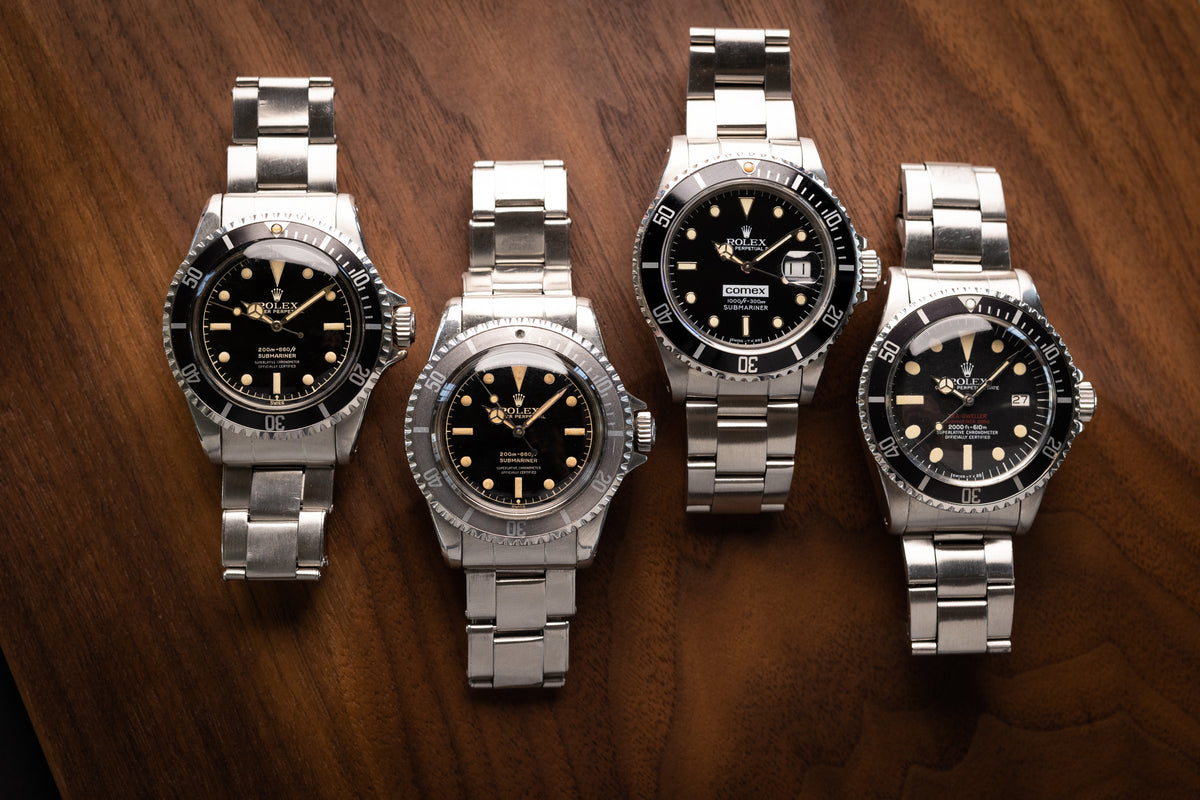
Vintage Rolex Watches








The History of Rolex Watches
Day-Dates, Datejusts, Submariners, GMT-Masters and Daytonas from the brand that defined the modern watch. Every one of our vintage Rolex watches is hand-selected for condition and authenticated for life.
Vintage Rolex Watches, Chosen One at a Time
No brand shaped the modern wristwatch more than Rolex. It made the first truly waterproof case, an early self-winding rotor and many of the tool watches every other brand still copies. As a result, vintage Rolex watches are where most collectors start. In fact, many never leave.
At Oliver & Clarke, Rolex is the backbone of our business. So far, we have sold more than 700 vintage Rolex watches. We buy them in exceptional condition. That means honest cases, original dials and movements that run the way they should. In addition, we are especially deep in the Day-Date and the Datejust, with rare dials most dealers never see.
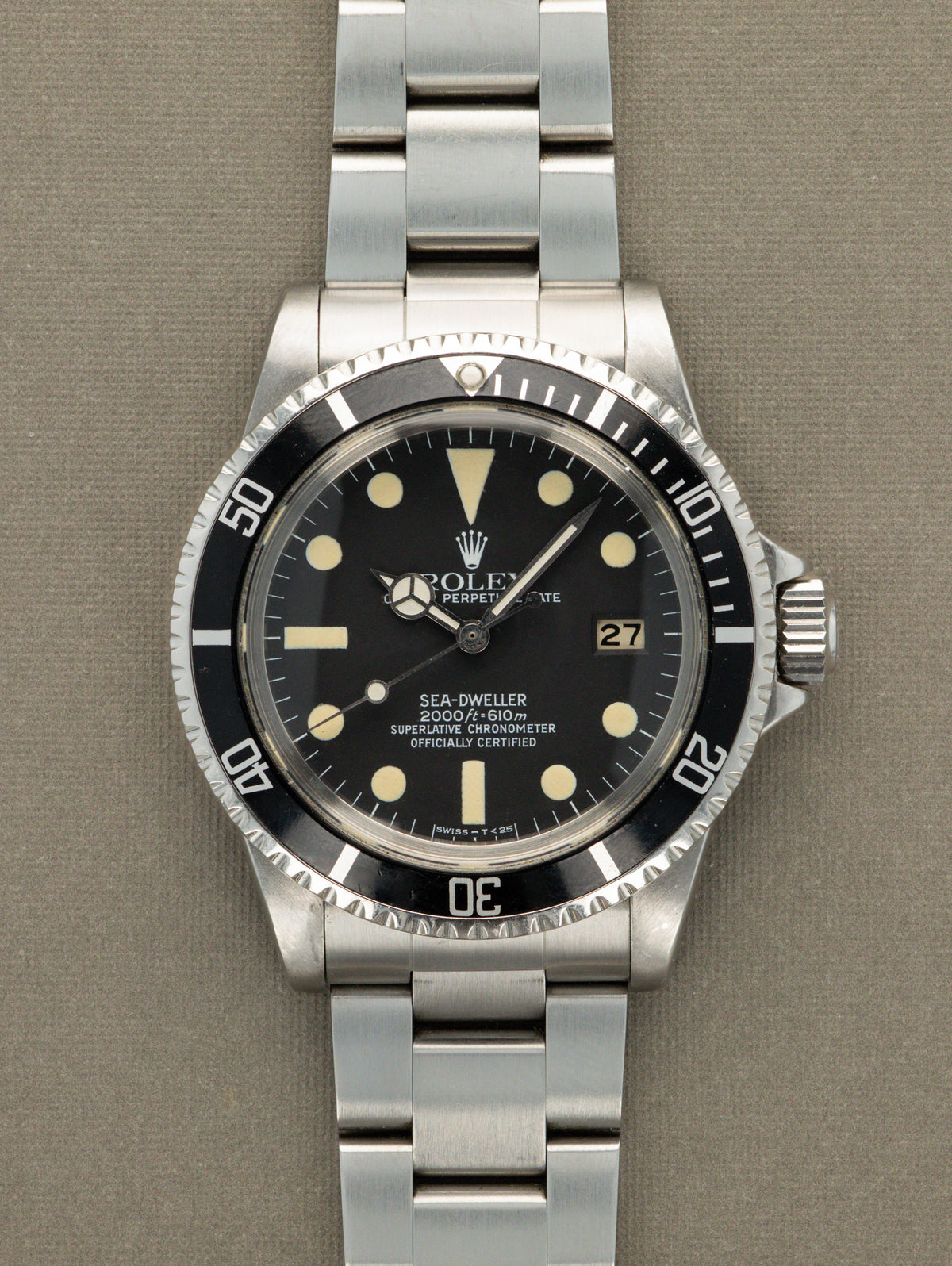
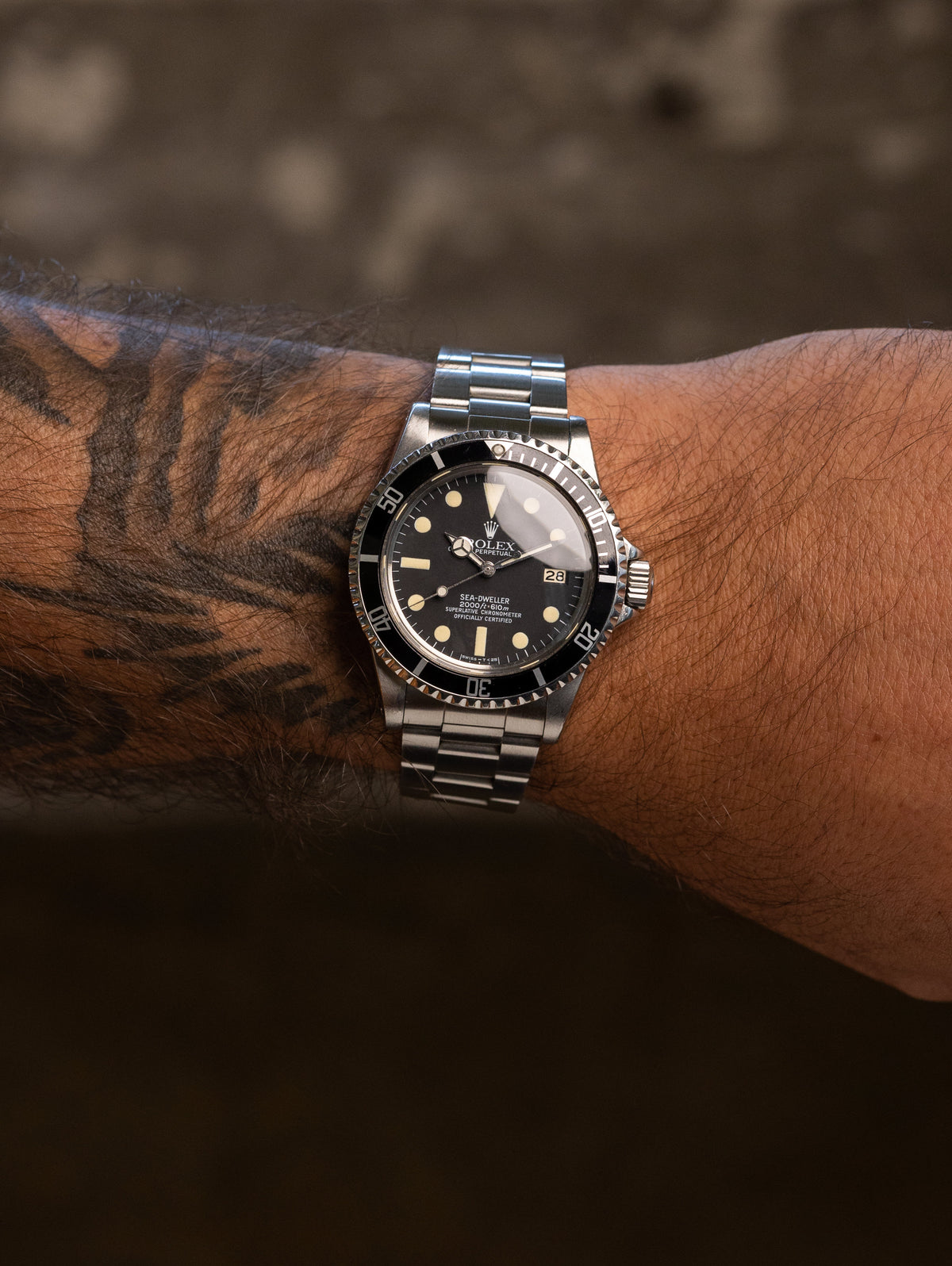
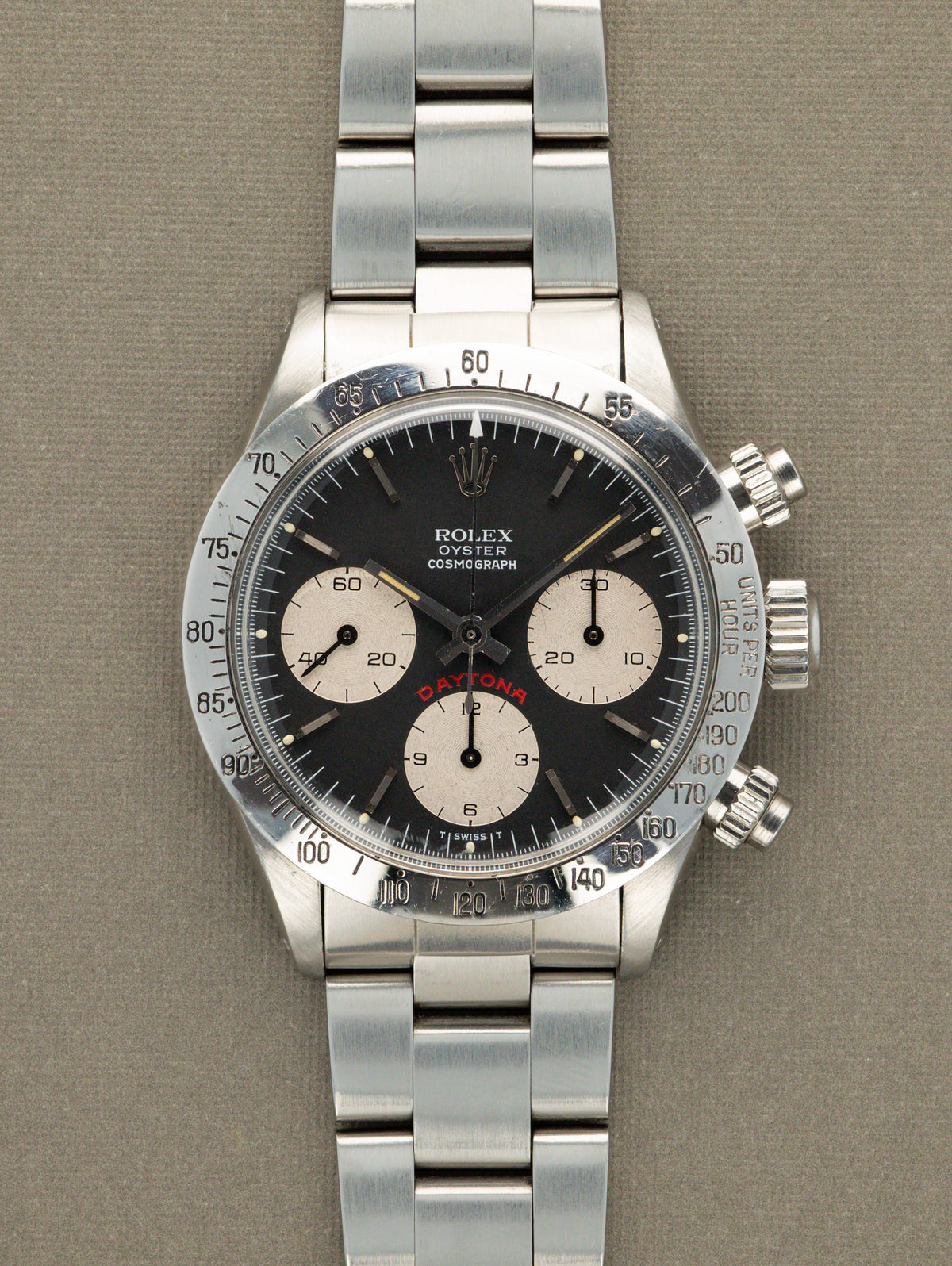
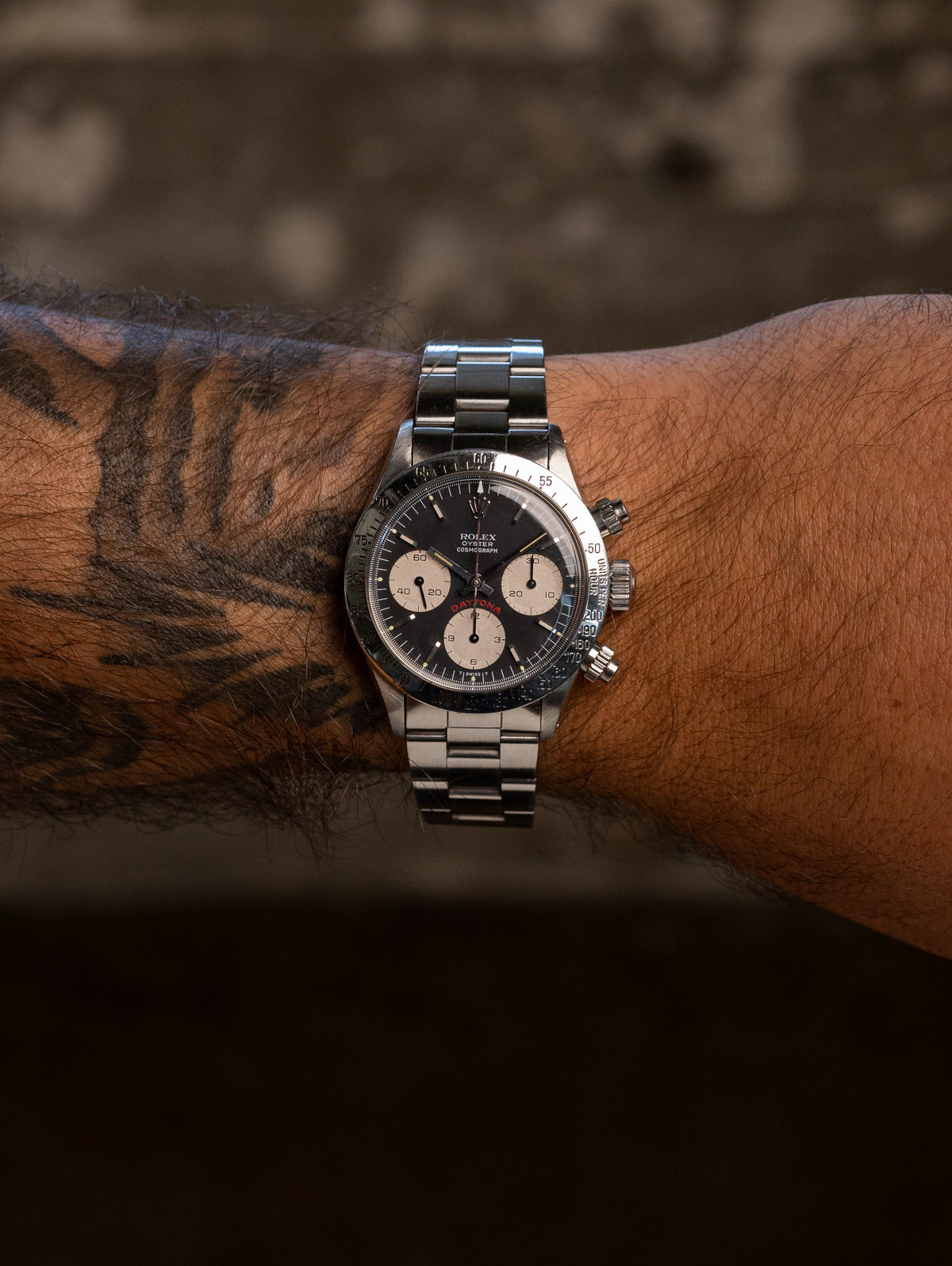
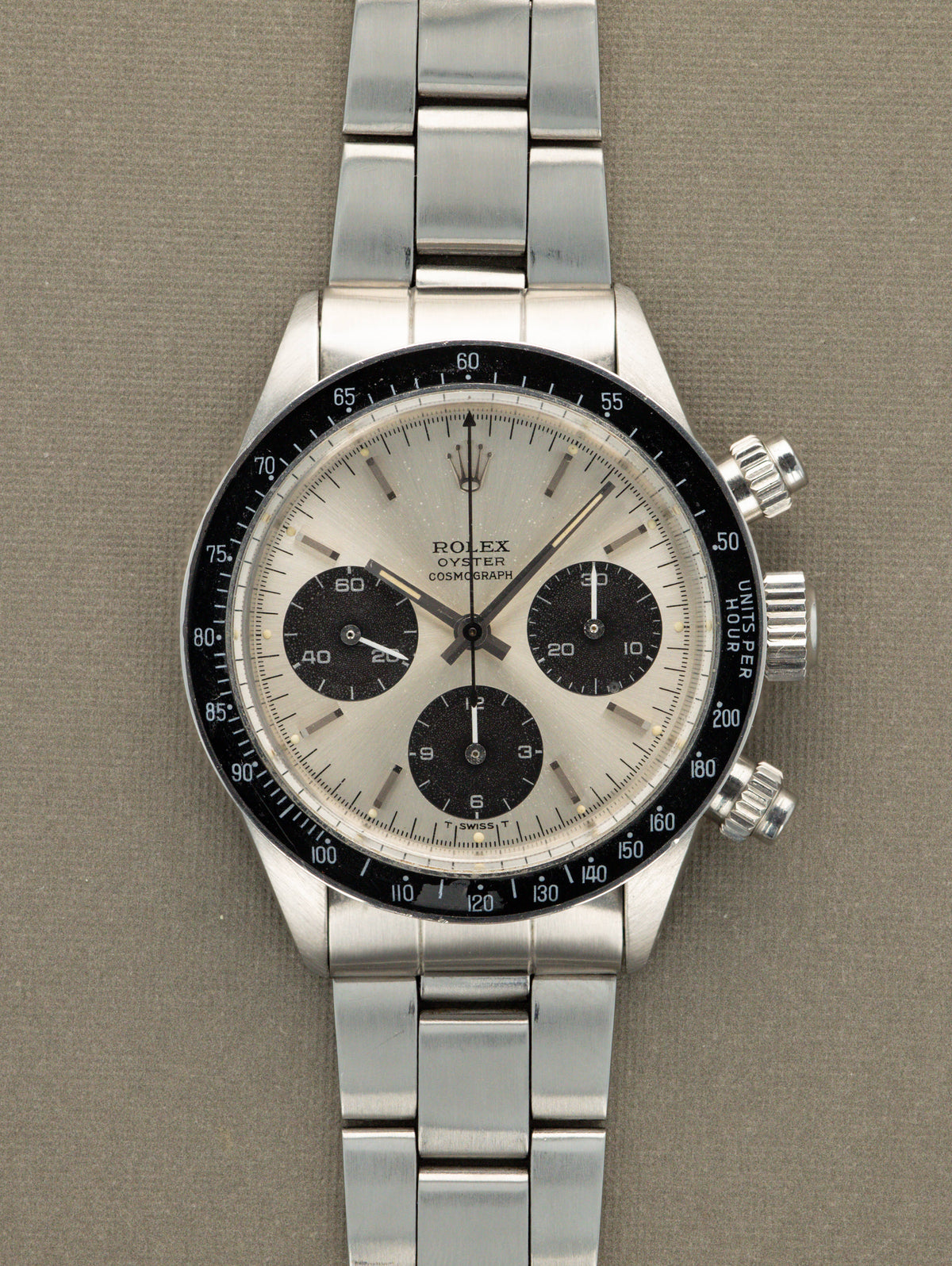
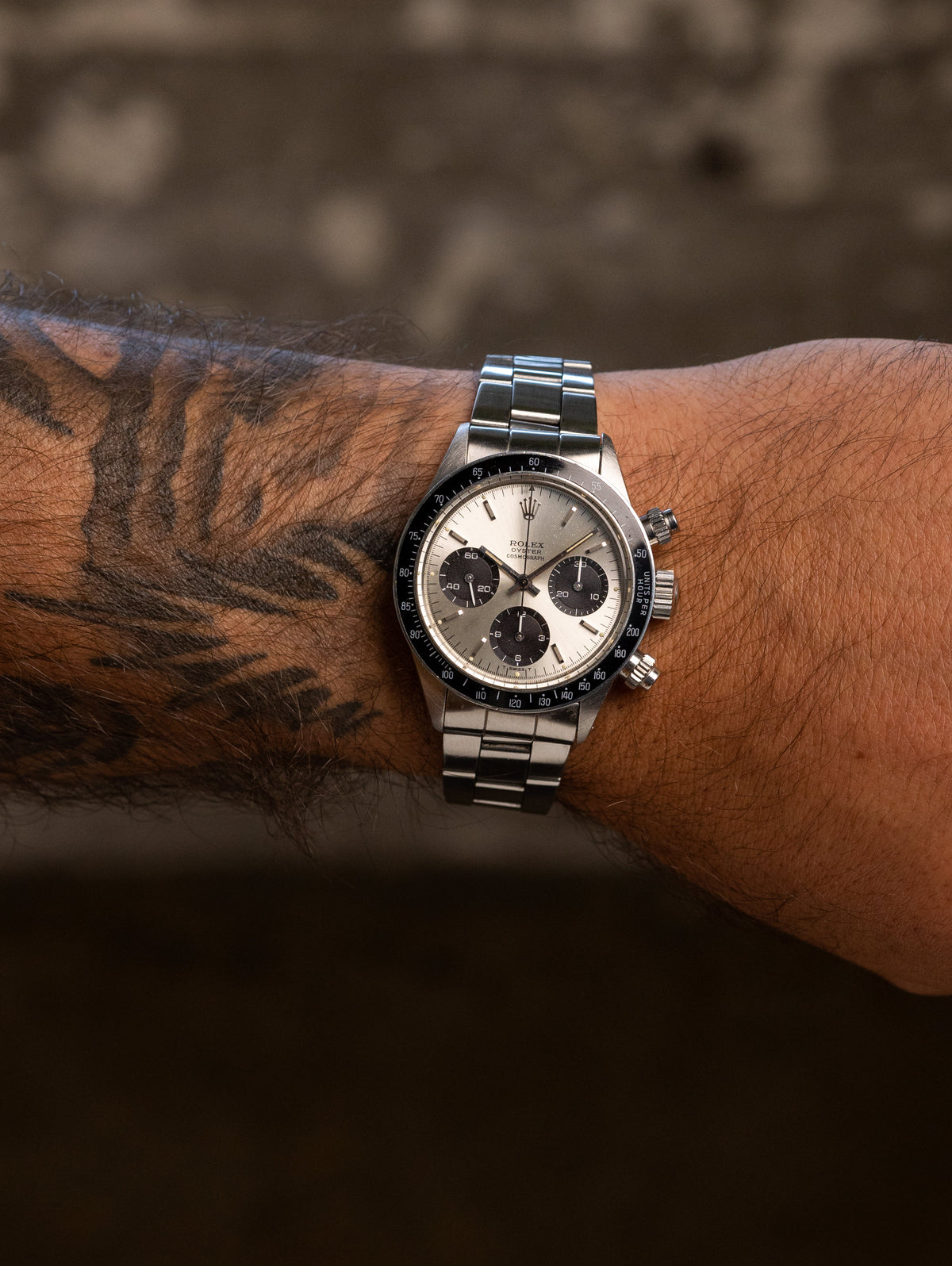
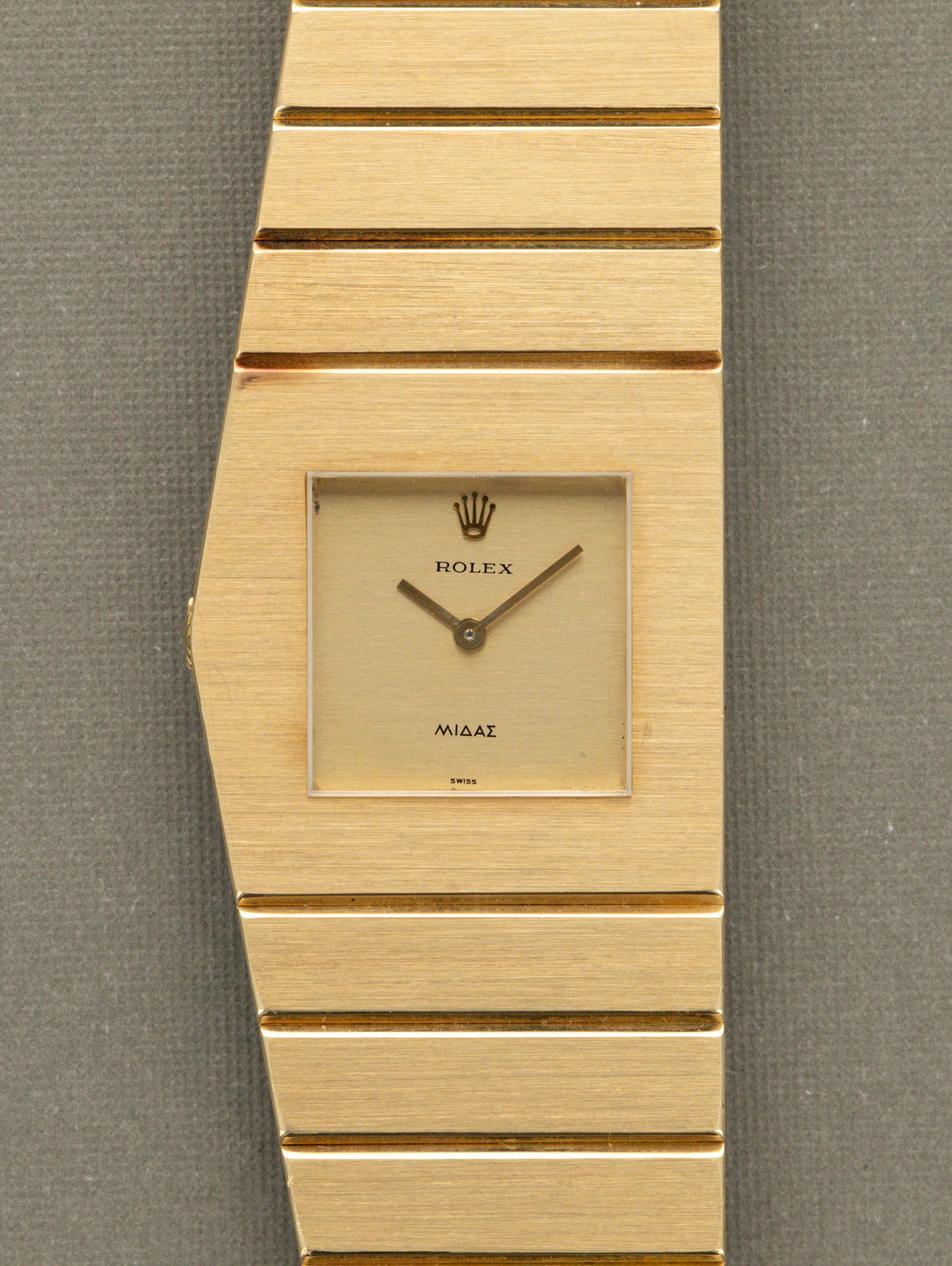
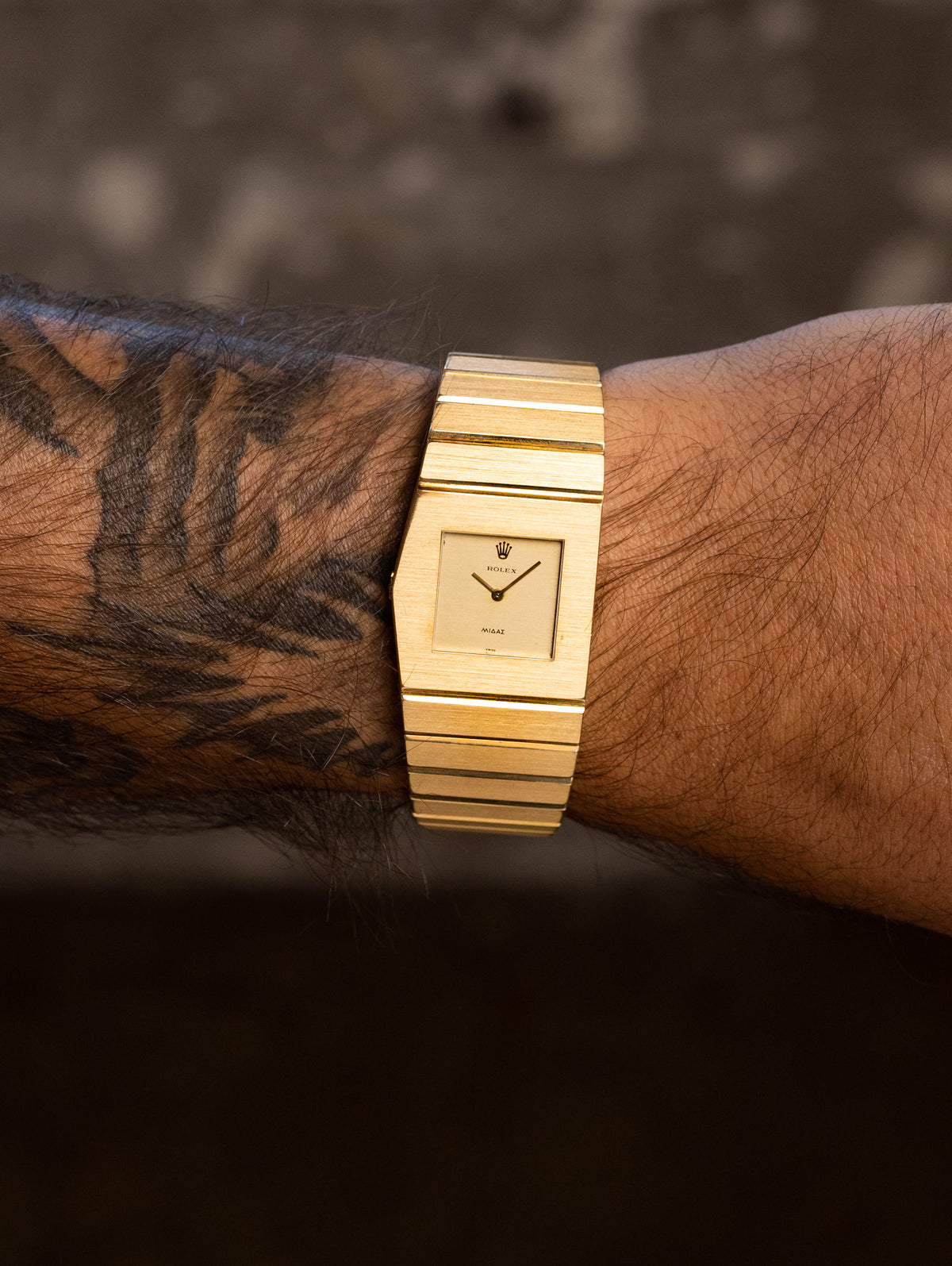
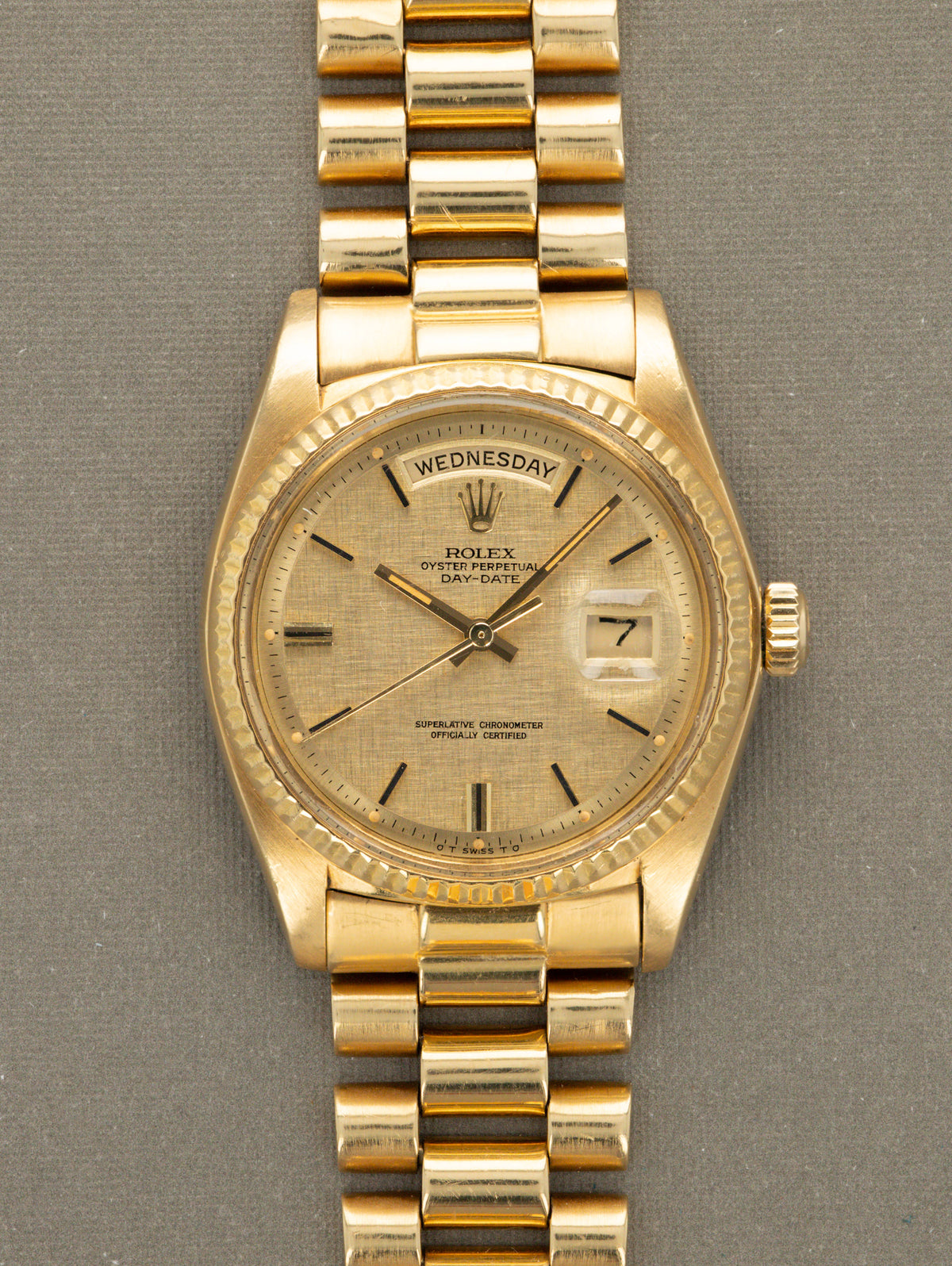
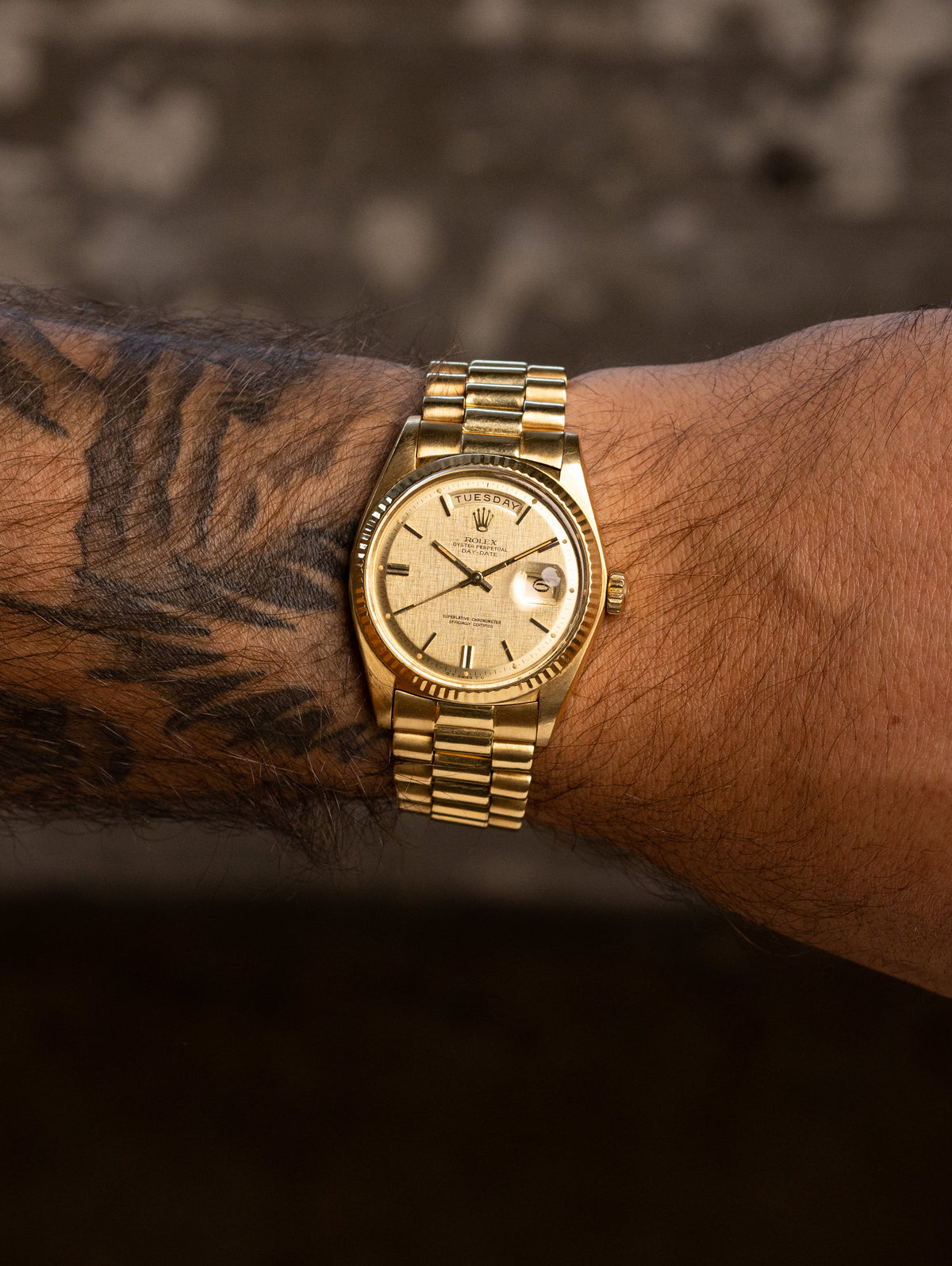
This page holds our current inventory of vintage Rolex watches. Right now, that includes two Daytona "Big Reds," two King Midas pieces, a Sea-Dweller, a "Red Sub," several GMT-Masters and a long run of Day-Date 1803s, including a "Stella" dial. When a watch sells, it moves to the O&C Archive. There, you can see every Rolex we have handled. To browse every brand we carry, visit our full collection of vintage watches.
Below is our guide to vintage Rolex watches. First, it covers where the brand came from and the terms in our listings. Then, it explains what to check before you buy and what these watches cost today.
From London to Geneva
The story of vintage Rolex watches starts with a young German in London.
1905: Wilsdorf and Davis
Hans Wilsdorf founded Wilsdorf & Davis in London in 1905, the start of what we now call vintage Rolex watches. At first, the firm imported Swiss movements and put them in cases. Then, in 1908, Wilsdorf registered the name Rolex. Later, in 1919, the company moved to Geneva.
1926: The Oyster
In 1926, Rolex launched the Oyster, one of the first truly waterproof wristwatch cases. To prove it, Mercedes Gleitze wore one while swimming the English Channel in 1927. As a result, the Oyster became the base of almost every Rolex since.
Chronometers
Rolex also pushed for accuracy. In fact, it was one of the first brands to certify wristwatches as chronometers. That is why many dials read "Superlative Chronometer Officially Certified." As a result, vintage Rolex watches earned a name for keeping good time.
1931: The Perpetual Rotor
Next, in 1931, Rolex added the Perpetual, a self-winding rotor that turns freely in both directions. Today, "Oyster Perpetual" still appears on most dials. In other words, those two words sum up why vintage Rolex watches work so well.
The 1940s and 1950s: The Classics Arrive
Then came the models that defined the brand. The Datejust arrived in 1945. The Explorer and the Submariner followed in 1953, and the Day-Date in 1956. Meanwhile, the GMT-Master was built for Pan Am pilots in the mid-1950s. Today, these are the vintage Rolex watches every other watch is measured against.
The 1960s: Daytona and King Midas
In 1963, Rolex introduced the Cosmograph Daytona for racing drivers. Soon after, in 1964, it launched the King Midas, a heavy gold watch designed by Gérald Genta. Later, the Sea-Dweller arrived in 1967 for deep-sea divers. Today, all three are among the most valuable vintage Rolex watches.
The 1970s and 1980s
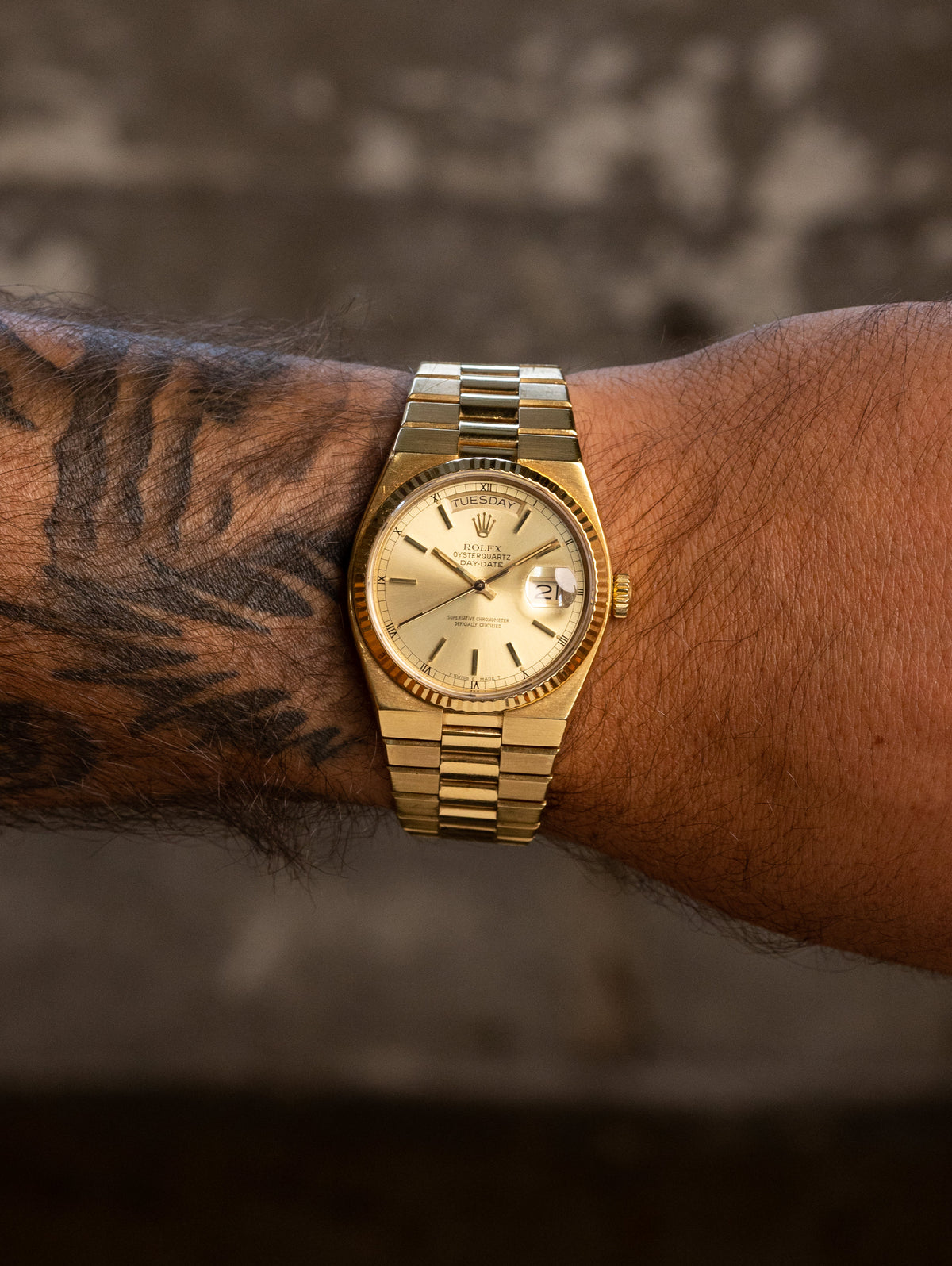
During the 1970s, Rolex added sapphire crystals and quickset dates. In addition, it launched the Oysterquartz in 1977. As a result, watches from this period sit between true vintage and modern Rolex. Collectors often call them neo-vintage, the newest group of vintage Rolex watches.
Terms Worth Knowing
Our listings for vintage Rolex watches use the same shorthand collectors use.
Oyster. Rolex's waterproof case, first made in 1926.
Perpetual. Rolex's self-winding rotor, first made in 1931.
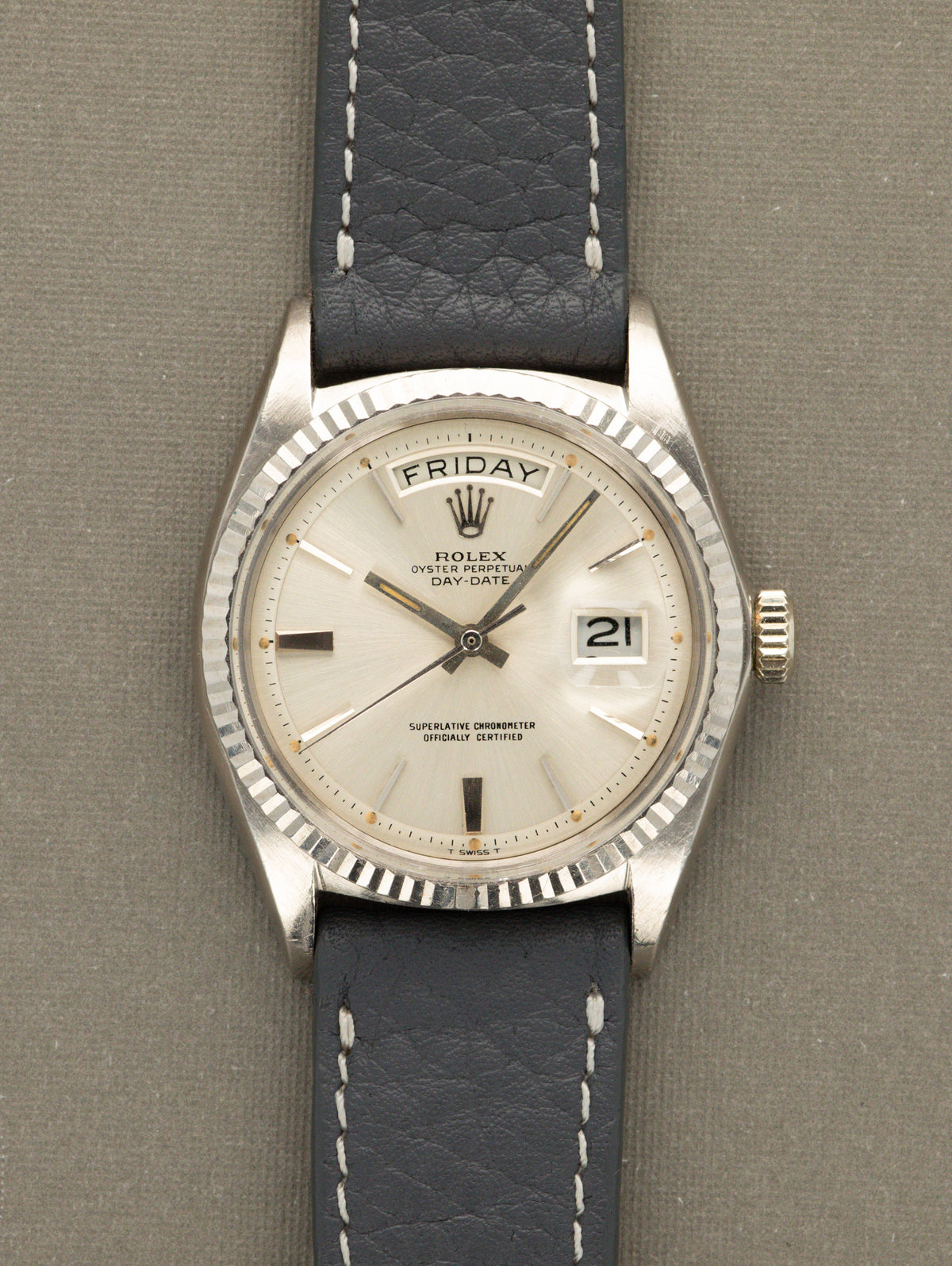
Gilt dial. A glossy black dial with gold-colored printing, used until the mid-1960s. In fact, gilt dials are some of the most wanted vintage Rolex watches.
Matte dial. The flat black dial that replaced gilt in the mid-1960s.
Sigma dial. A 1970s dial with small sigma symbols near six o'clock, showing solid gold markers.
Linen dial. A dial with a fine crosshatched texture, like linen cloth.
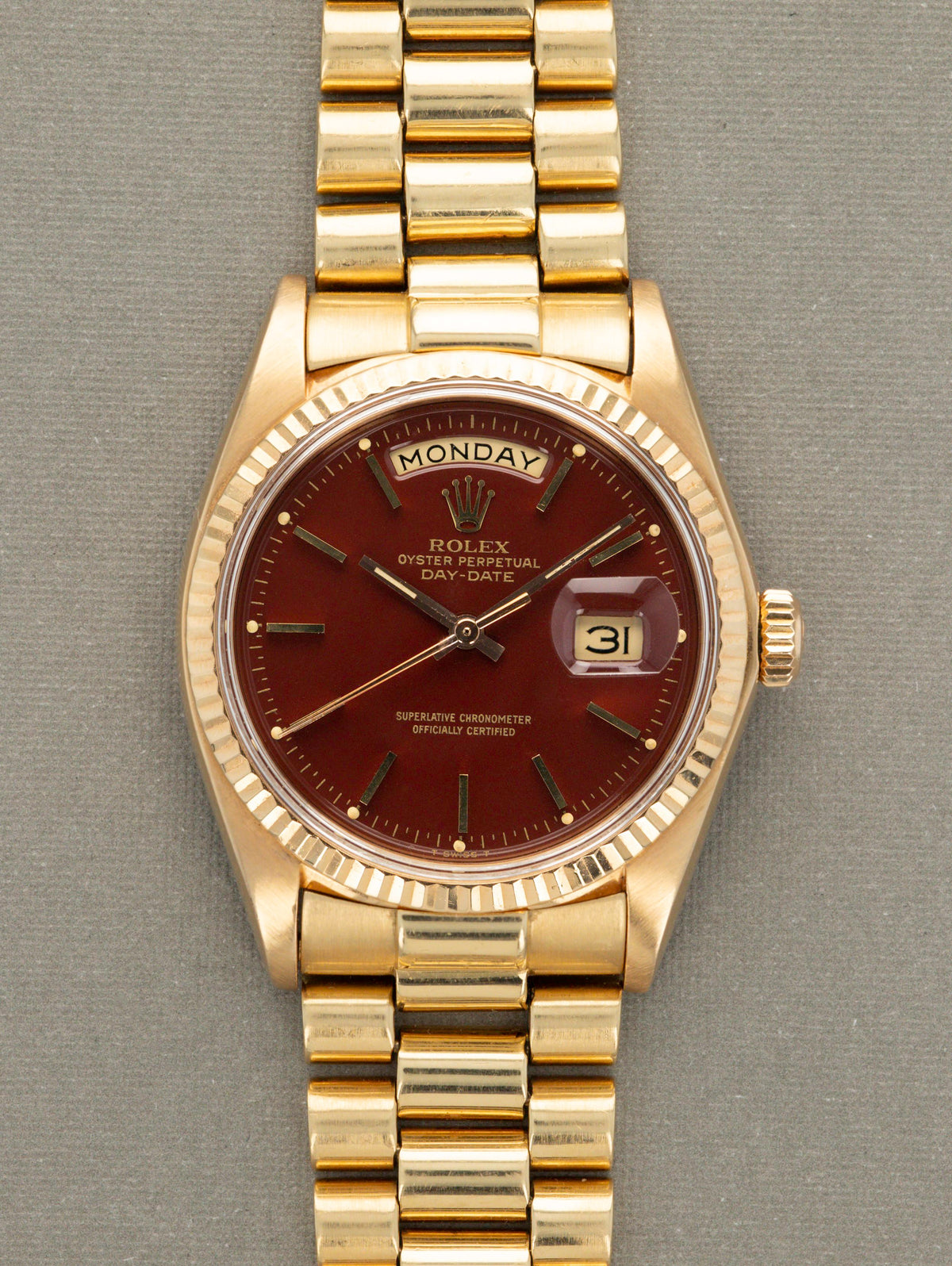
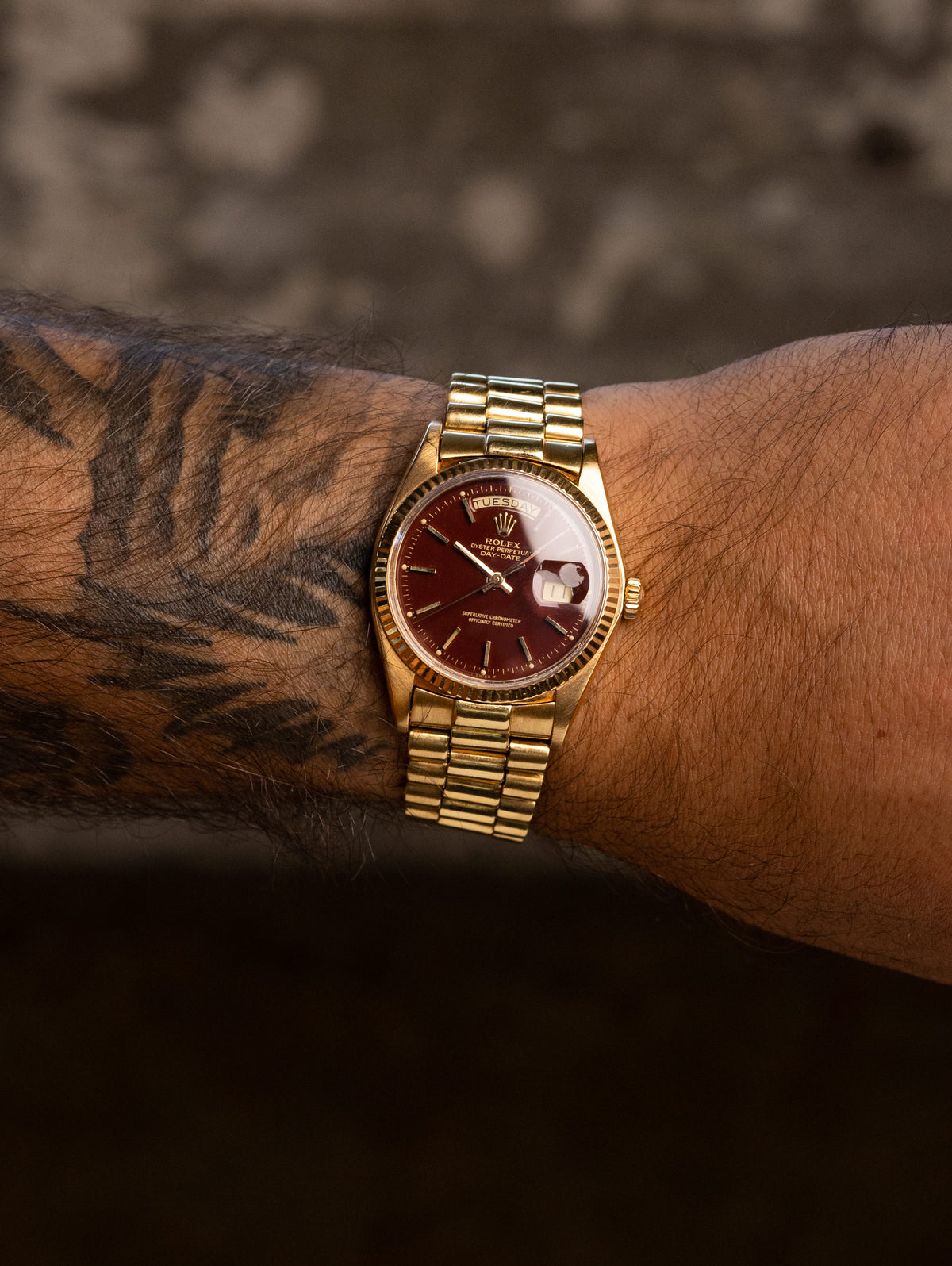
Stella dial. A bright lacquer dial in colors like oxblood, blue or green, used on 1970s Day-Dates.
Stone dial. A dial cut from stone, such as lapis lazuli, onyx or tiger's eye.
Wide Boy. A Day-Date dial with wide hour markers.
Tropical dial. A dial that has faded from black to brown. No two are alike.
Tritium. The lume used from the 1960s to the late 1990s. It ages to cream or "pumpkin."
PCG. Pointed crown guards, found on early Submariner and GMT-Master cases.
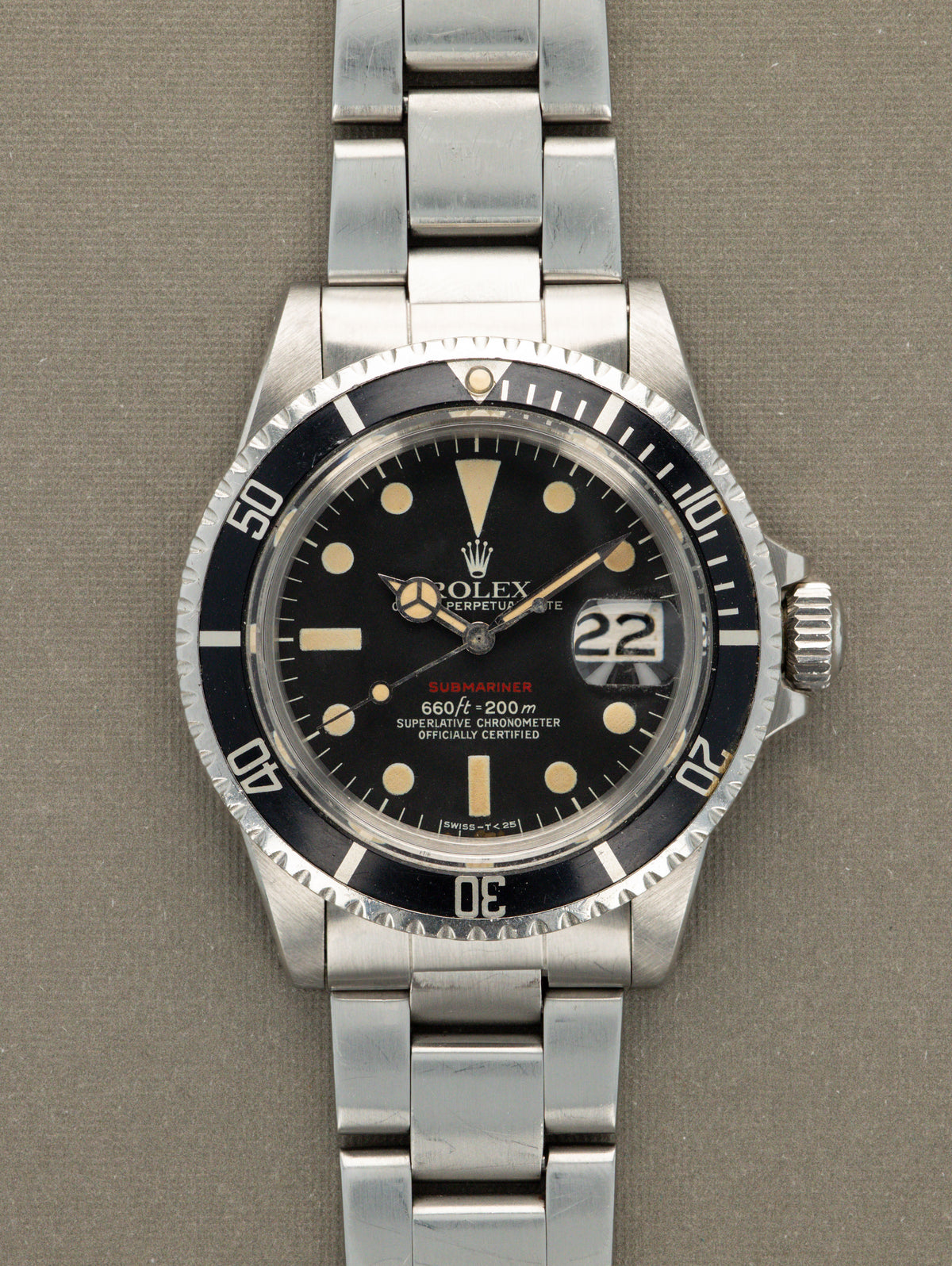
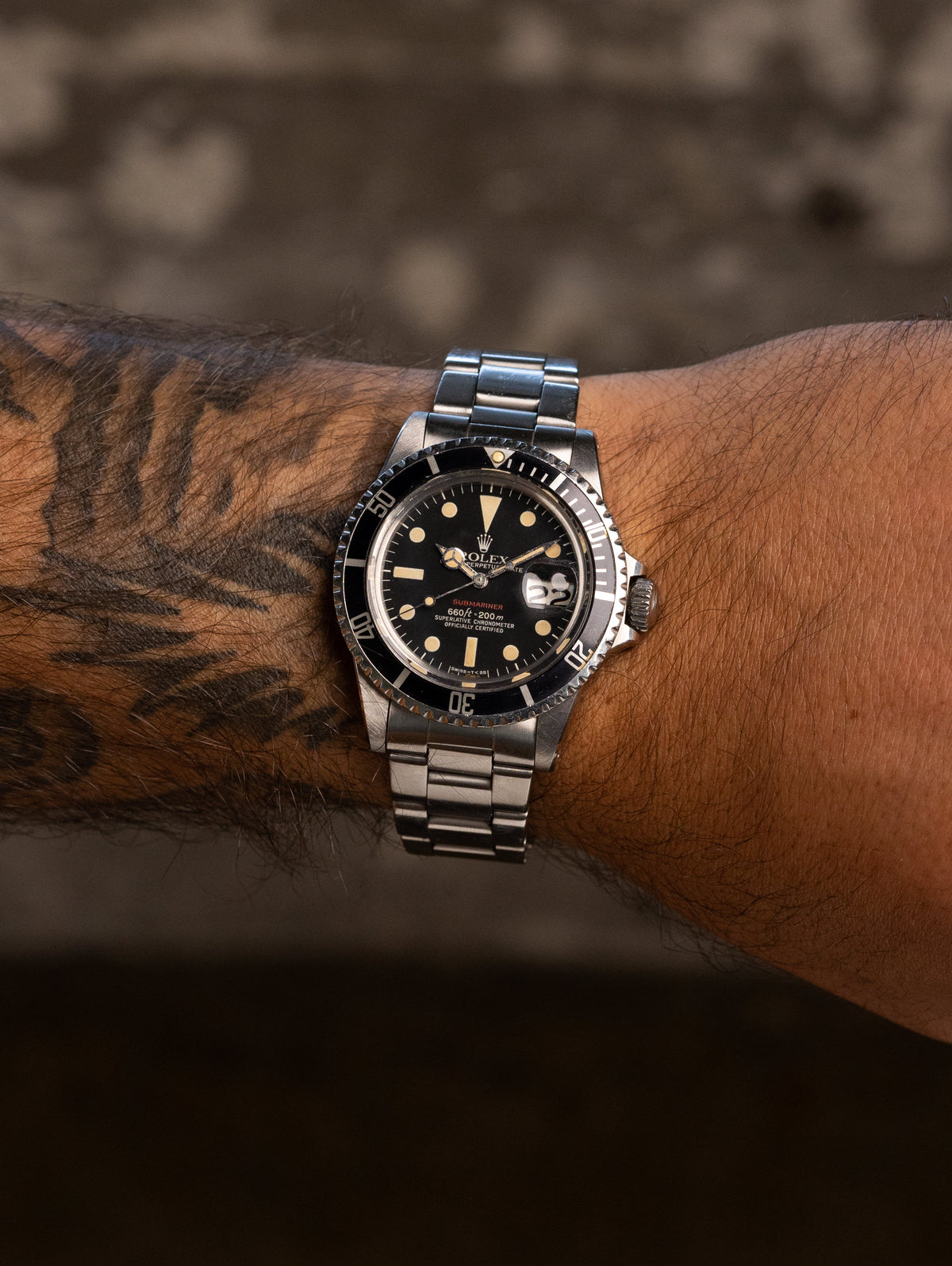
Red Sub. An early Submariner Date ref. 1680 with "Submariner" printed in red.
Big Red. A Daytona with "Daytona" printed in red above the lower register.
MK dial. Short for "Mark." Collectors number dial variations, such as MK1 or MK6.
Quickset. A date you can set from the crown. Its arrival in the late 1970s helps date many vintage Rolex watches.
Jubilee and Oyster bracelets. The five-link Jubilee was made for the Datejust in 1945. Meanwhile, the three-link Oyster suits sport models.
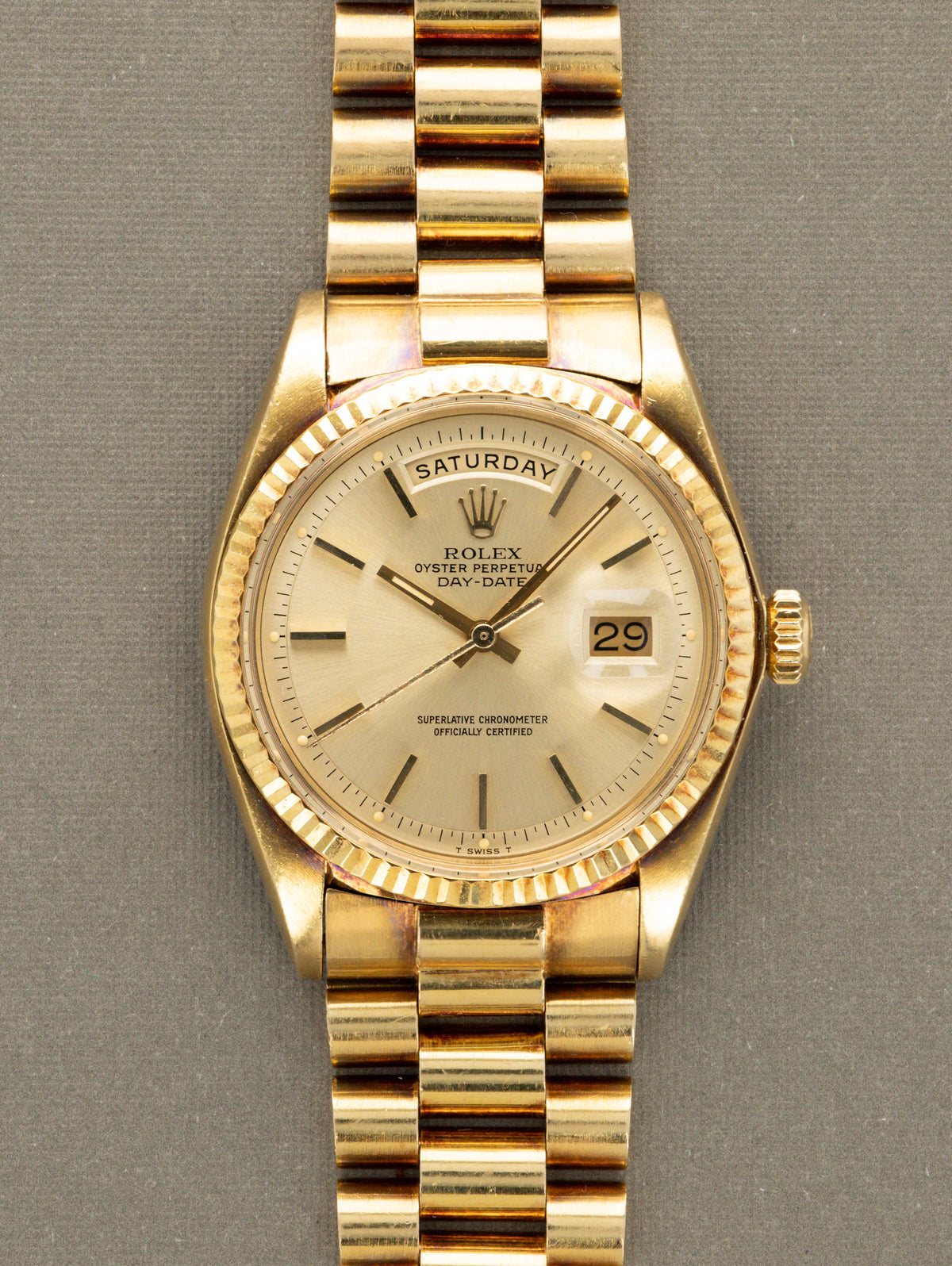
President bracelet. The semicircular three-link bracelet made for the Day-Date.
Box and papers. The original box and warranty paper. They prove a watch's history and add value.
Bubbleback. A 1930s and 1940s Oyster Perpetual with a domed caseback to fit the early rotor. These are some of the earliest automatic vintage Rolex watches.
Cyclops. The small magnifier over the date window, added in the 1950s.
Chronometer. A watch tested and certified for accuracy.
The Dress Classics
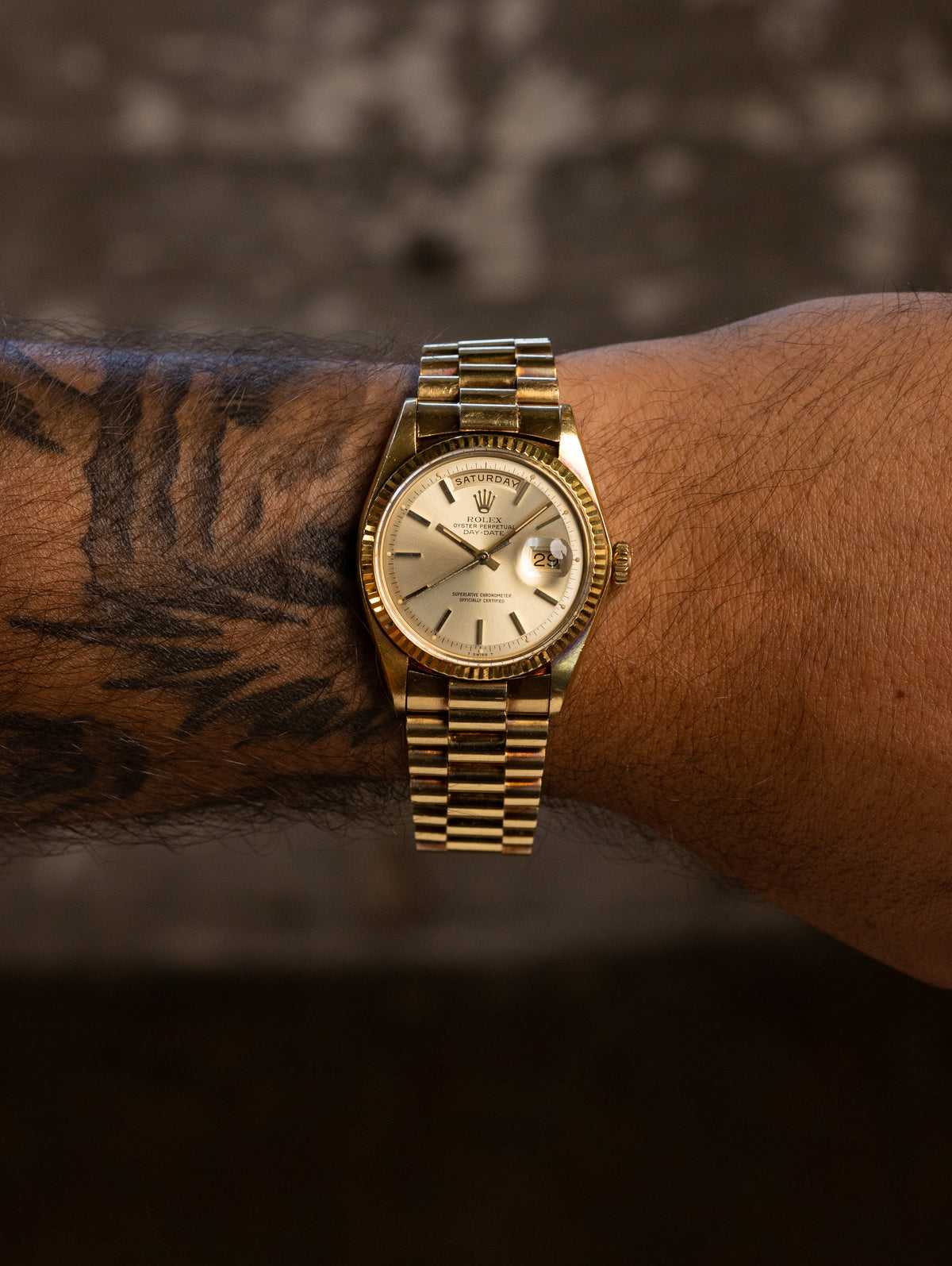
For many collectors, the Day-Date and Datejust are the heart of vintage Rolex watches. In fact, they are what we sell most.
Day-Date 1803
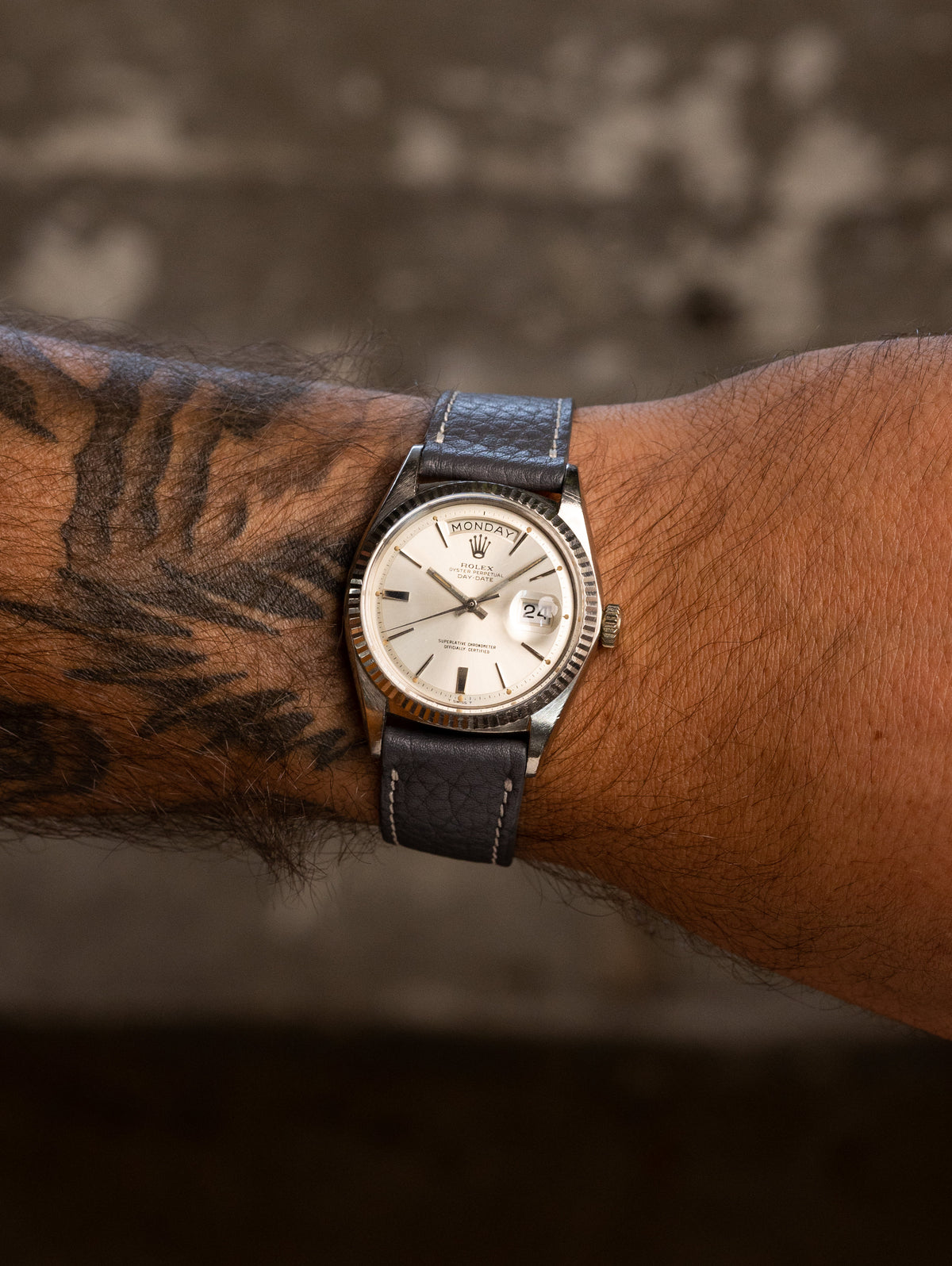
Made from about 1960 to the late 1970s, the 1803 is the classic gold Day-Date. It shows the day spelled out at twelve and the date at three. Above all, it came with more dial variations than almost any other Rolex. For example, we have sold Stella, linen, sigma, Wide Boy and "door stop" dials.
Day-Date 18038 and 18238
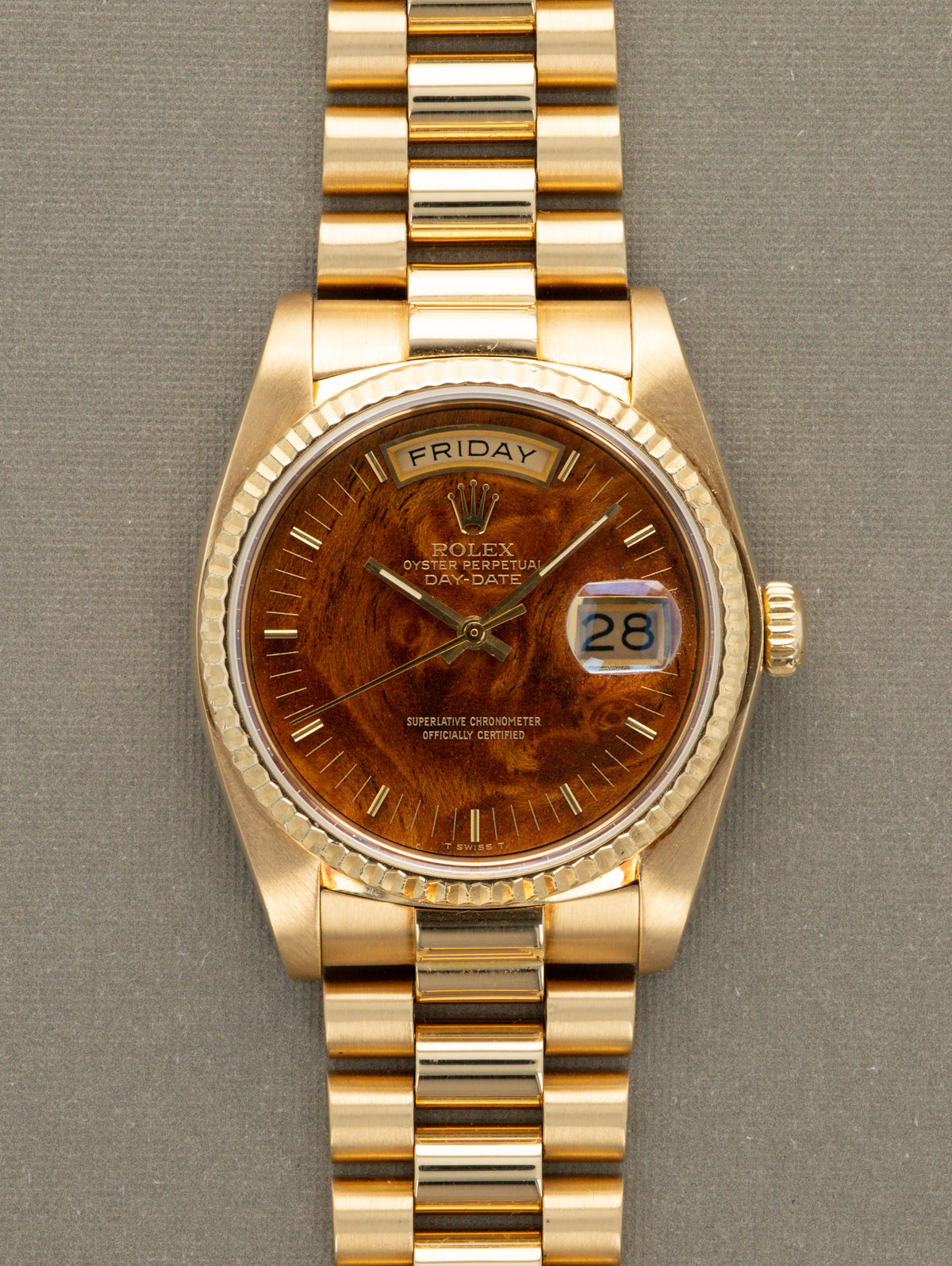
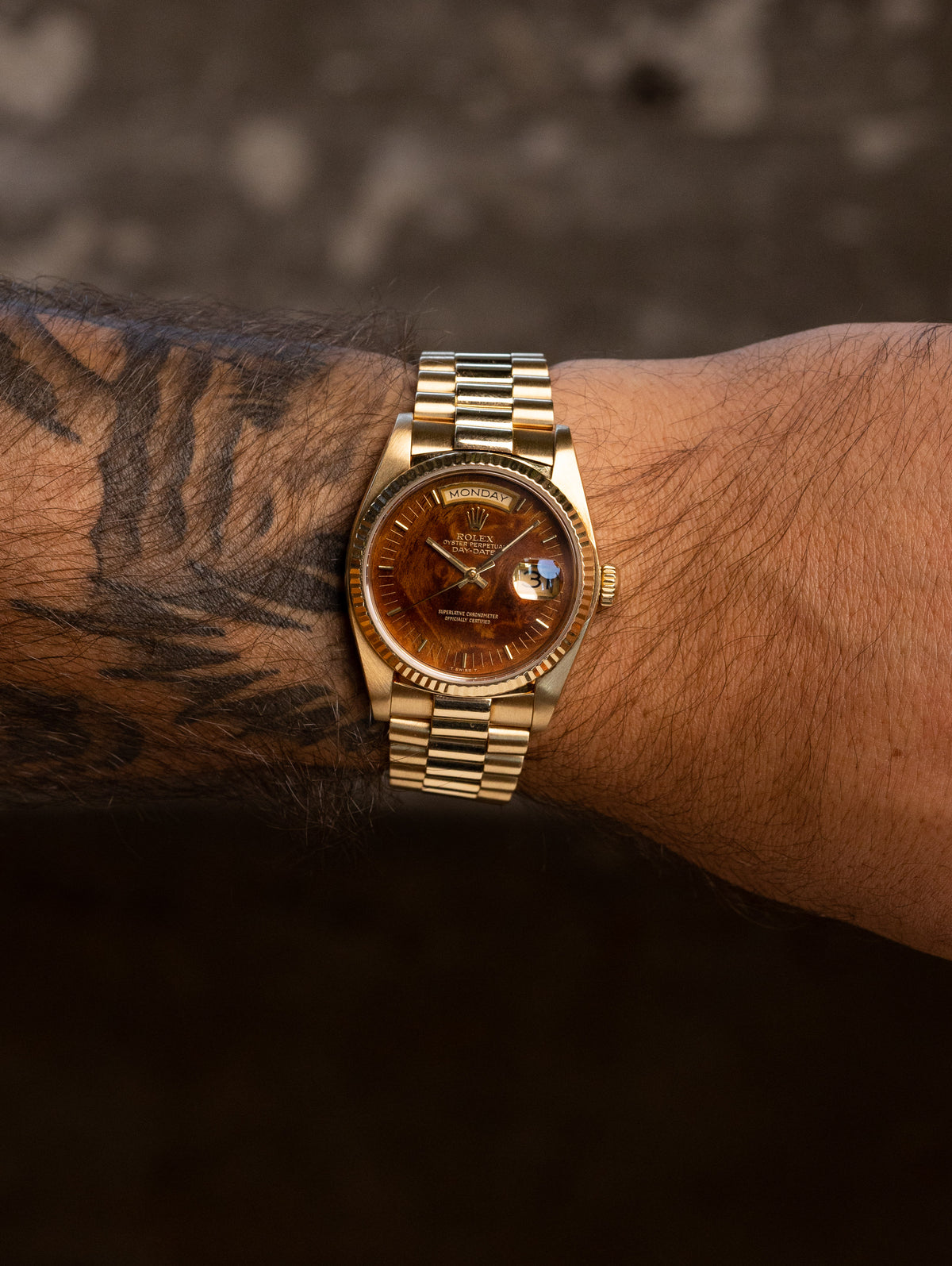
Later Day-Dates added a sapphire crystal and a quickset date. Meanwhile, they kept the same look. For example, we have sold the 18038 with a burlwood dial and the 18238 with a lapis lazuli dial.
Oysterquartz Day-Date
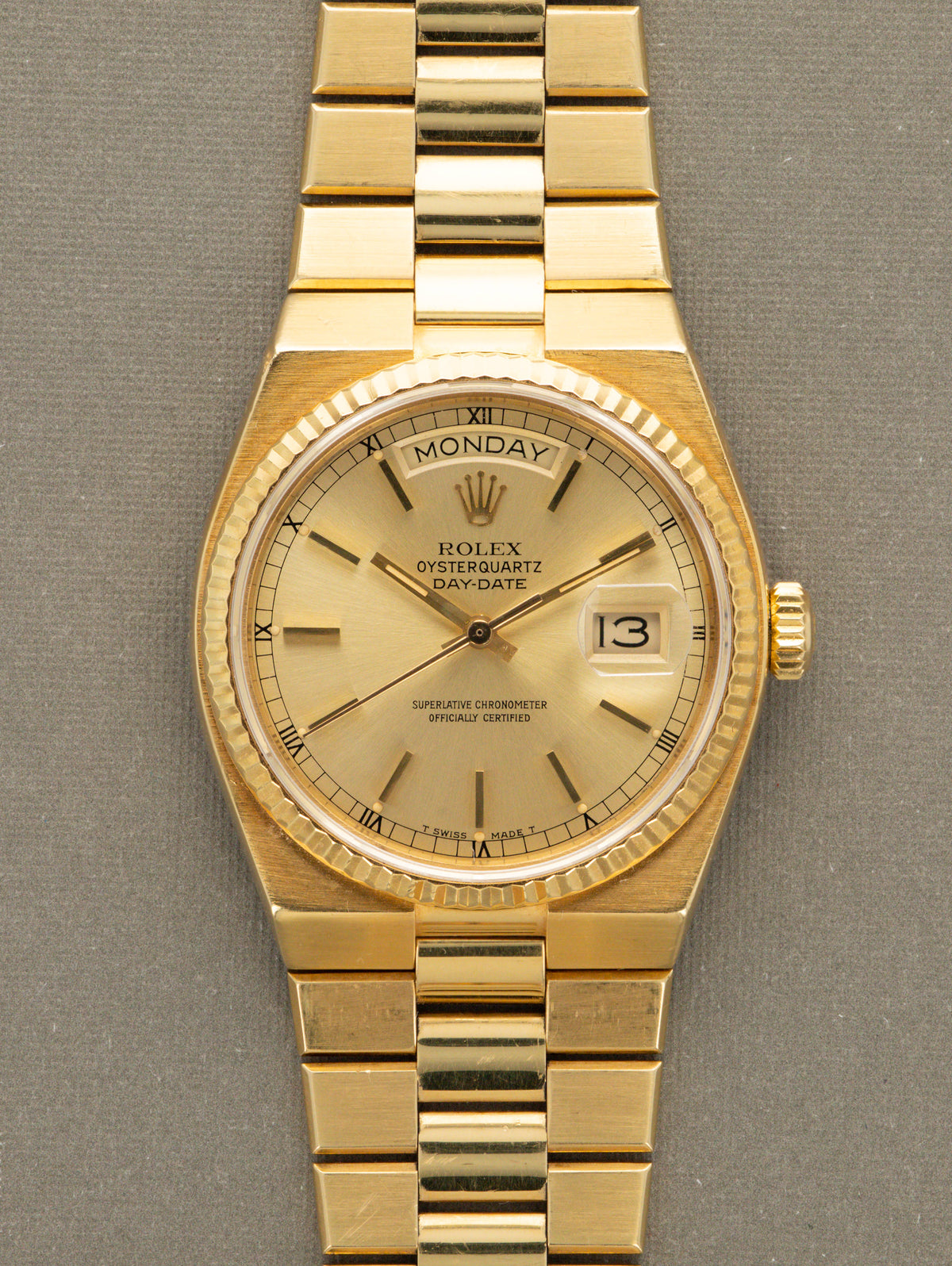
The Oysterquartz used Rolex's own quartz movement and an angular case. As a result, it is one of the most unusual vintage Rolex watches from the 1970s and 1980s.
Datejust 1600, 1601 and 1603
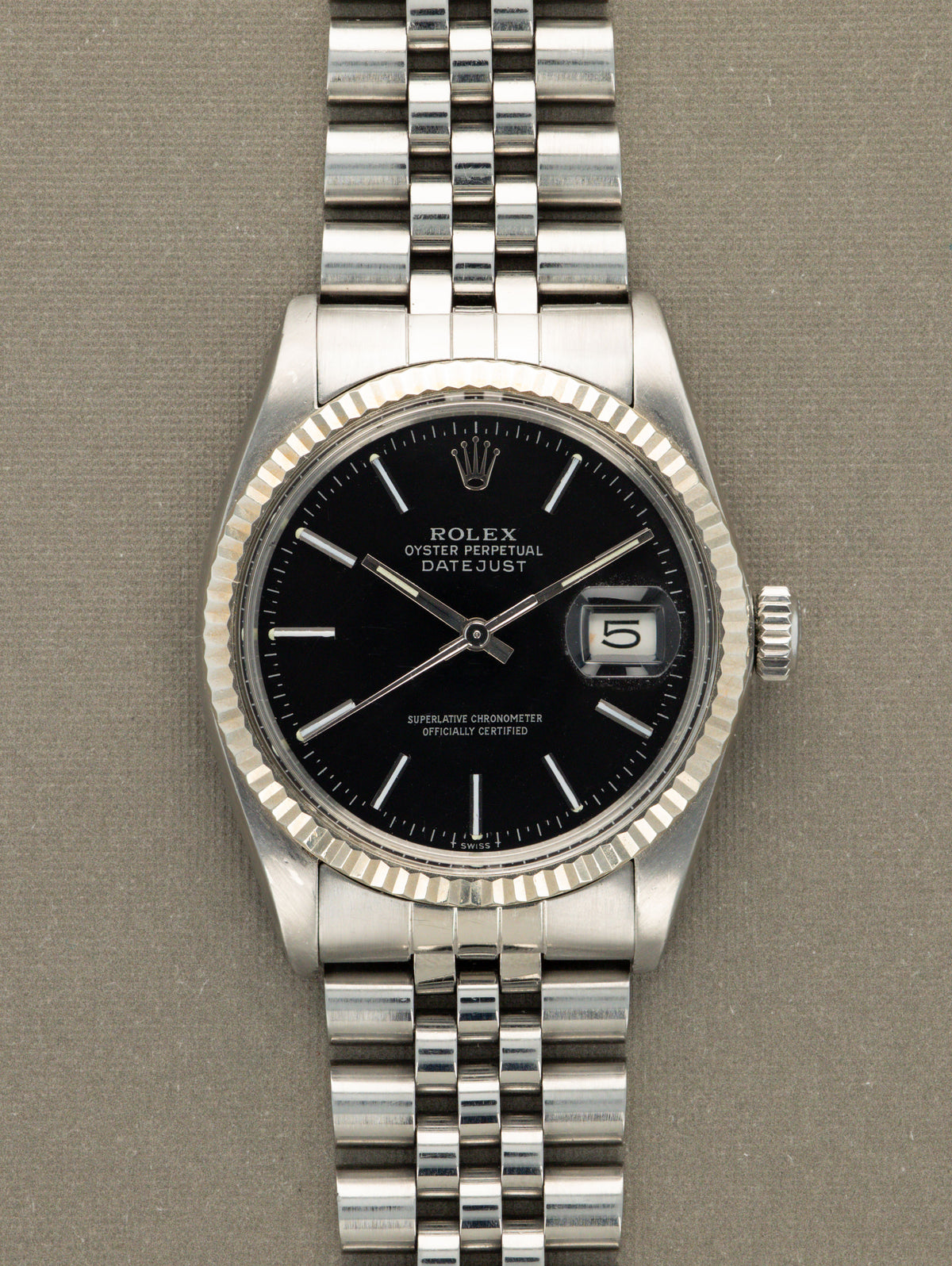
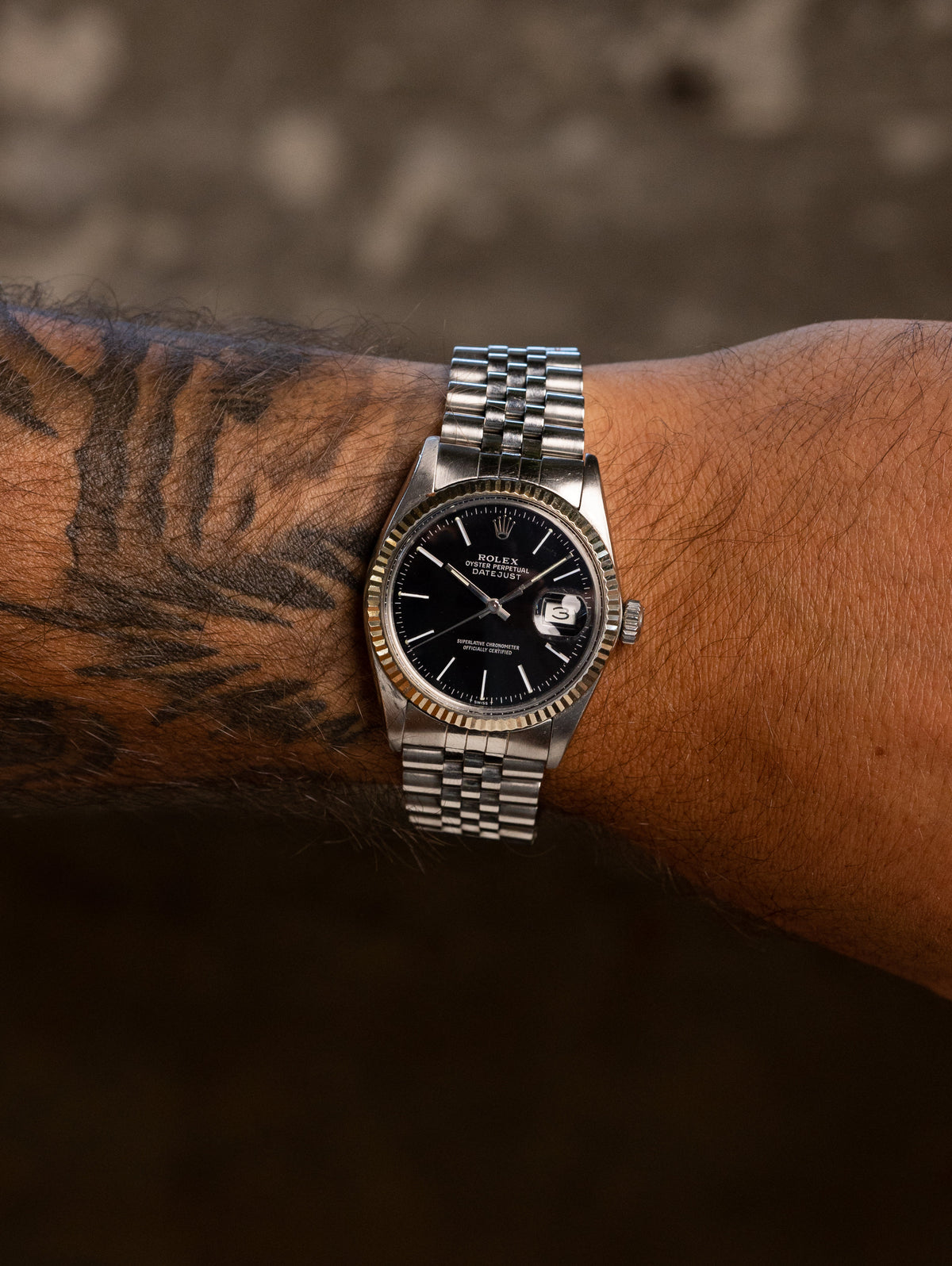
The steel and two-tone Datejust is the most wearable of all vintage Rolex watches. In particular, the 1601 and 1603 from the 1960s and 1970s come in many dial and bezel styles.
Datejust 16014 and 6605
The 16014 added a quickset date in the late 1970s. By contrast, the 6605 comes from the 1950s, with a smaller case and earlier dials. It is one of the older vintage Rolex watches we carry.
King Midas
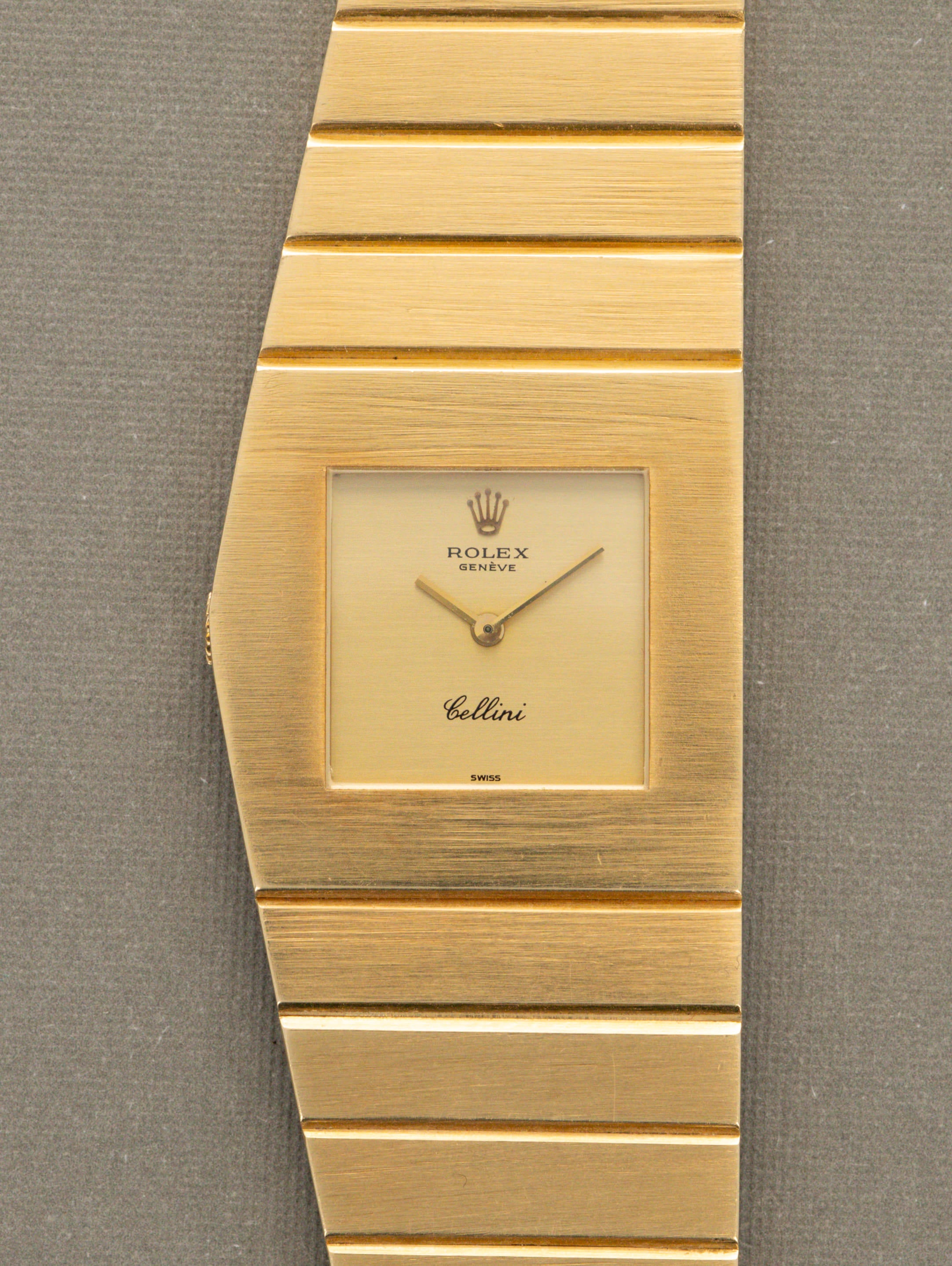
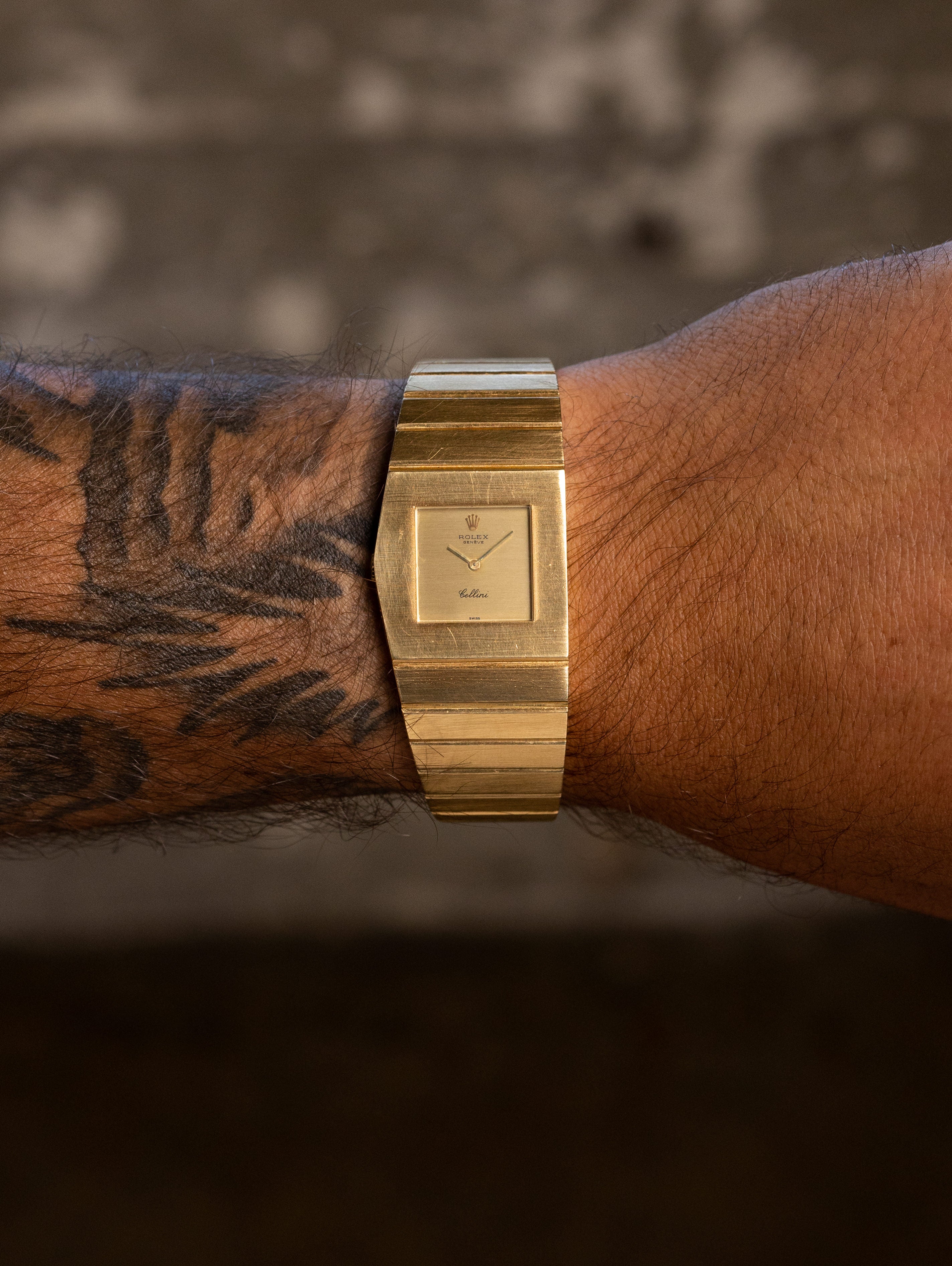
Designed by Gérald Genta and launched in 1964, the King Midas is a heavy, asymmetrical solid gold watch. For example, we carry a ref. 3580 and a ref. 4315 right now. It is one of the boldest vintage Rolex watches ever made.
Precision and Dress Watches
Rolex also made thin Precision models and rectangular dress watches. For example, we carry a ref. 6512 "Veriflat" with an Asprey dial and a two-tone rectangular ref. 1378.
Retailer-Signed Dials
Some vintage Rolex watches were sold by great jewelers who added their name to the dial. For example, our current Precision carries an Asprey signature, from the famous London shop. These double-signed dials are rare, and they add both history and value. For more classic dress watches, see our vintage Cartier watches.
Vintage Rolex Watches Built as Tools
The dress watches get our attention. Still, the tool watches made the brand famous, and they are some of the most collected vintage Rolex watches in the world.
Submariner 5513
Made from the early 1960s until about 1989, the 5513 is the longest-running Submariner. It has no date, so the dial is clean and balanced. In fact, many collectors call it the purest of all vintage Rolex watches. For example, we carry a 5513 with a non-serif dial and pumpkin lume.
Submariner Date 1680
The 1680 was the first Submariner with a date. In addition, early examples have "Submariner" printed in red. As a result, the "Red Sub" is one of the most wanted vintage Rolex watches from the 1970s.
Sea-Dweller 1665
The Sea-Dweller was built for deep-sea divers in 1967. It added a helium escape valve. As a result, it is one of the most technical vintage Rolex watches ever made. For example, we carry a 1665 "Great White" with an MK3 dial.
GMT-Master 1675
The 1675 ran from about 1959 to 1980. Early examples with pointed crown guards and gilt dials are the vintage Rolex watches collectors want most. Right now, we carry several, including one with box and papers.
GMT-Master 16758
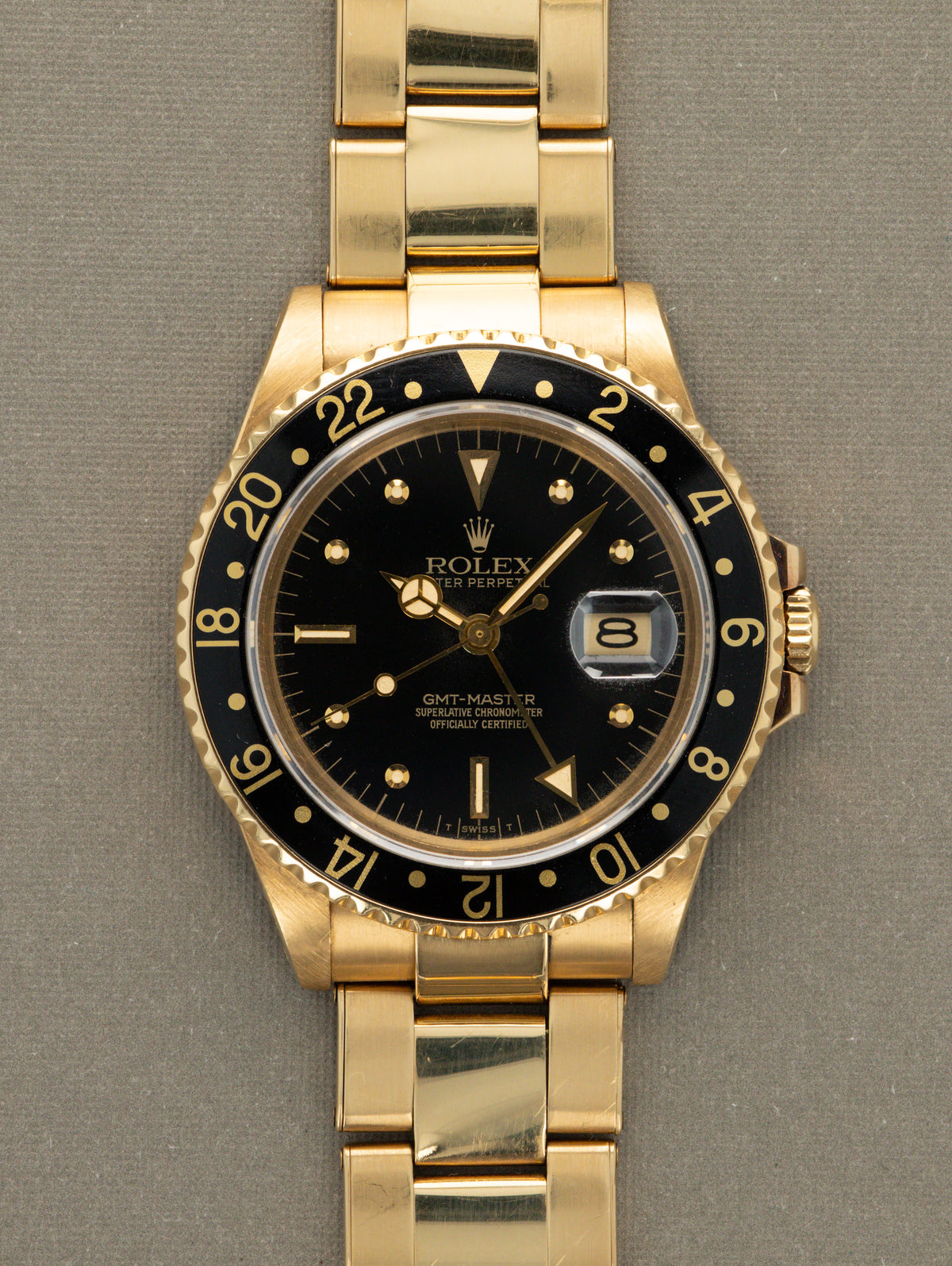
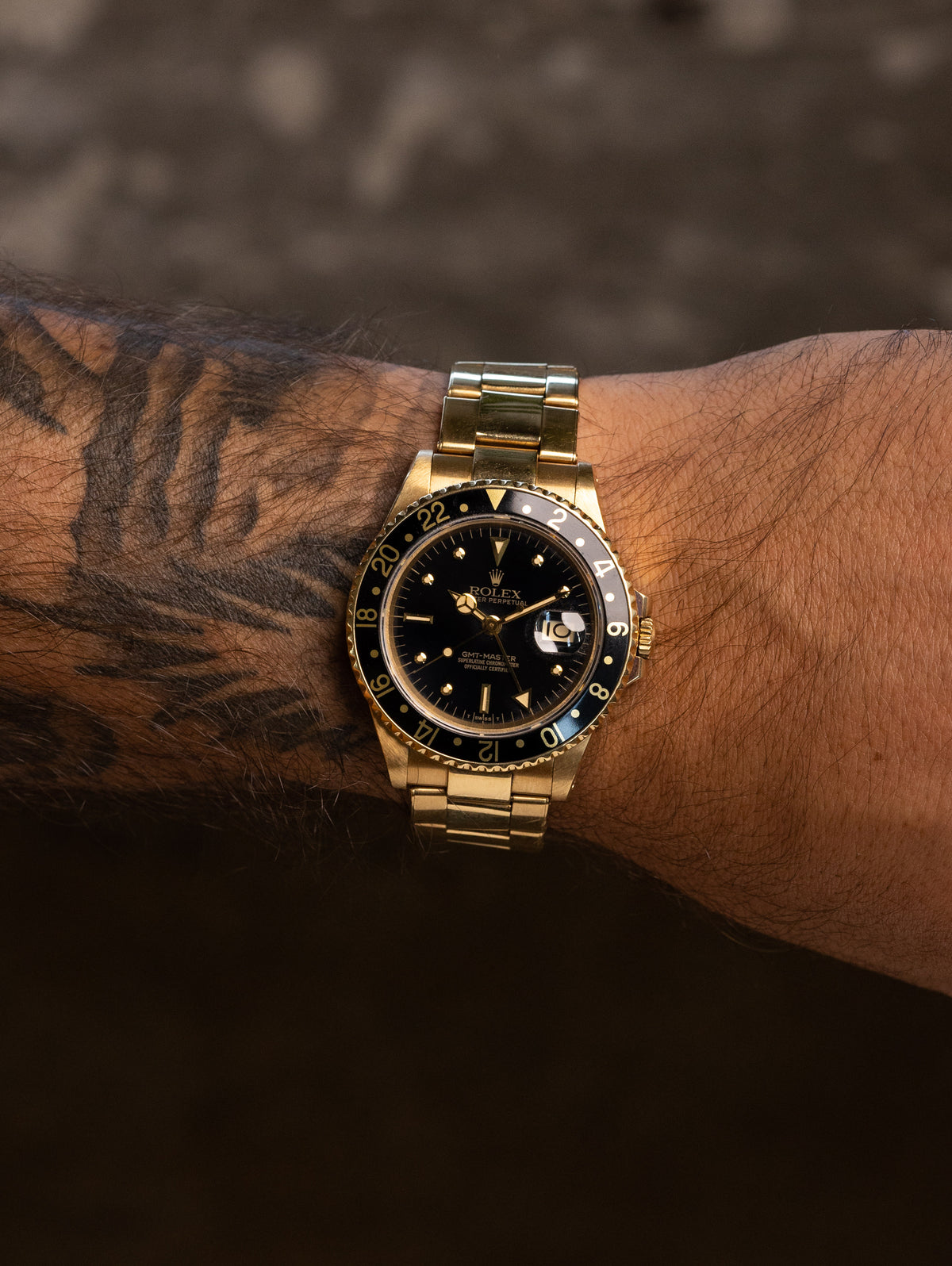
The 16758 is the gold GMT-Master of the 1980s. For example, we carry one with the black "nipple" dial, named for its raised round markers.
Daytona 6263 and 6265
The Daytona was built for racing drivers. The 6263 and 6265 added screw-down pushers in the 1970s. Today, "Big Red" examples are some of the most valuable vintage Rolex watches we handle.
Explorer and Pre-Explorer
Rolex launched the Explorer in 1953, the year of the first Everest ascent. Before that, early Oyster Perpetuals like the ref. 6150 shared its style. Collectors call these vintage Rolex watches "Pre-Explorers."
Oyster Perpetual and Oysterdate
Finally, the simple Oyster Perpetual and Oysterdate are the easiest way into vintage Rolex watches. For example, we carry the 6548 midsize, the 6599 "Jumbo," the 1501 with a gilt dial and the 6694 Oysterdate.
Milgauss, Turn-O-Graph and Air-King
Rolex also made the antimagnetic Milgauss, the Turn-O-Graph with a rotating bezel and the simple Air-King. These are some of the less common vintage Rolex watches. If you are looking for one, ask us, and we will search our network.
What to Look For Before You Buy
Condition decides the value of vintage Rolex watches more than anything else. In addition, Rolex is the most copied brand in the world. So care matters.
The Case
On vintage Rolex watches, look for sharp lugs, crisp bevels and original brushing. A heavy polish rounds them off. So we always say when a case is unpolished, and many of ours are.
The Dial
The dial is often half the value. Therefore, check that the printing is crisp and correct for the year. A refinished or "service" dial lowers the value. However, honest patina can add to it.
Lume and Hands
The lume on the dial and hands should have aged together to the same shade. Bright white hands on a cream dial usually mean a replacement.
Bezel, Crystal and Crown
On sport models, check the bezel insert, the crystal and the crown. Faded "ghost" bezels can add value. On the other hand, a new insert usually lowers it.
Serial and Reference Numbers
Rolex stamps the reference between the lugs at twelve and the serial at six. Together, they help date the watch and confirm it is correct.
The Bracelet
An original bracelet adds value, especially on sport models. So check for stretch, the end links and the clasp code.
Box and Papers
Original boxes, papers and hangtags all add value and confidence. For example, we carry a King Midas with its original hangtag.
Service Parts
Many vintage Rolex watches received new dials, hands or bezels during service. These parts keep a watch running. However, they lower its collector value. So we always say when a part has been replaced.
How to Choose
There is no wrong way into vintage Rolex watches. Still, a few questions narrow it down quickly.
Start With Size
Most vintage Rolex watches measure 34 to 40mm. For example, an Oyster Perpetual is about 34mm, a Datejust or Submariner about 36 to 40mm. Even so, slim bezels make many wear larger than their size.
Dress or Sport
A Day-Date or Datejust goes with a suit. By contrast, a Submariner or GMT-Master goes with almost anything. Many collectors end up wanting both.
Everyday Wear
Rolex built its watches to be worn. So a Datejust, Oyster Perpetual or Submariner can go anywhere. In fact, many of our clients wear their vintage Rolex watches every day.
Steel, Two-Tone or Gold
Steel is the easiest to wear every day. Meanwhile, two-tone feels richer, and solid gold feels special. In fact, a gold Day-Date is one of the best values in high-end collecting.
Strap or Bracelet
Most Rolex models wear on bracelets. Still, a leather strap can change the look completely. Our leather watch straps are cut to suit vintage cases and lug widths.
Ask Us
Finally, ask for extra photos, a video or our honest opinion on any of our vintage Rolex watches. We are also glad to compare pieces in our inventory and the Archive.
Build a Rolex Collection
The best collections have a point of view. For example, a run of Day-Date dials, one great sport model from each decade or a Datejust in every metal. Ask us about the gaps in yours, and we will help you fill them.
What Vintage Rolex Watches Cost
Prices for vintage Rolex watches cover a wide range. In general, the model and the dial matter most.
The Price Bands
Under $7,500: steel and two-tone Datejusts, the Oysterdate, the Oyster Perpetual and dress watches.
$7,500 to $20,000: most gold Day-Date 1803s, the Oyster Perpetual "Jumbo," the Precision, early Datejusts and many Submariner 5513s.
$20,000 to $40,000: the "Red Sub," GMT-Master 1675s, gold GMT-Masters, wood-dial and quartz Day-Dates and the Pre-Explorer.
$40,000 and above: the King Midas, Stella and stone-dial Day-Dates and Daytona 6263s and 6265s.
What Moves a Price
Five things decide what vintage Rolex watches are worth. First, the reference. Next, the dial. Then, the condition of the case. After that, whether the parts are original. Finally, whether the box and papers survive.
Why Dials Matter So Much
Two Day-Date 1803s can differ in price by five times, just because of the dial. For example, a plain silver dial costs far less than an oxblood Stella. As a result, the dial is where most of the value in vintage Rolex watches lies.
Neo-Vintage Rolex
Rolex watches from the late 1970s through the 1990s are often called neo-vintage. They have sapphire crystals and quickset dates, yet many still have tritium dials. As a result, they offer vintage charm with modern ease. For example, the Day-Date 18038 and Datejust 16014 fall into this group.
Buying From Oliver & Clarke
We built Oliver & Clarke around the experience we wanted when buying vintage watches ourselves.
Authenticated for Life
All of our vintage Rolex watches are inspected by our specialists. In addition, authenticity is guaranteed for life.
One-Year Warranty
All of our vintage Rolex watches also come with a one-year mechanical warranty from delivery.
72-Hour Inspection Period
You have 72 hours after delivery to inspect your watch in person. See our shipping, returns and warranty page for full terms.
Visit the Showroom
Of course, you can also see any of our vintage Rolex watches in person at our Los Angeles showroom, 6363 Wilshire Boulevard, by appointment.
Sell or Trade
We buy and trade vintage Rolex watches every week, from Datejusts to Daytonas. Send us yours through Sell Your Watch.
Other Brands
Many Rolex collectors also love its sister brand. So see our vintage Tudor watches for Rolex cases at a lower price. Similarly, see our vintage Patek Philippe watches for gold dress watches from Geneva.
Our View, After 700 Rolex
Life is too short to wear a boring watch. And no brand makes it easier to find a great one than Rolex.
First, condition beats rarity. The best vintage Rolex watches are the honest ones.
Second, buy the dial on vintage Rolex watches. It is where the character, and most of the value, lies.
Third, do not overlook the Day-Date. It is one of the best values in the market.
Fourth, wear it. These watches were made to be worn, and they look best with a life behind them.
Fifth, trust the classics. A gold Day-Date or steel Submariner has never gone out of style.
Finally, the best vintage Rolex watches go fast. If you see one you love here, it may be in the Archive next week.
Vintage Rolex Watches Questions
Which vintage Rolex watches are most collectible?
The Daytona, early Submariners and GMT-Masters with gilt dials, the "Red Sub" and rare-dial Day-Dates are the most collected vintage Rolex watches. In addition, the King Midas and Stella and stone-dial Day-Dates carry strong demand.
Collectibility comes down to design history, rarity and condition. The tool watches made Rolex famous, so early Submariners, GMT-Masters and Daytonas with original dials carry real weight. Meanwhile, the gold Day-Date came with more dial options than almost any other watch. As a result, a rare dial can turn a common reference into a prize. For example, a Stella or lapis dial can cost several times more than a plain silver one. In addition, pointed crown guards, gilt printing and early bezel inserts all add to demand on sport models. Whatever the model, condition matters most. So an honest, unpolished example of a common reference usually holds its value better than a tired example of a rare one. Finally, our Archive shows the more than 700 vintage Rolex watches we have sold, which is a good guide to what collectors want.
How can I tell how old a vintage Rolex is?
The serial number, stamped between the lugs at six o'clock, is the best guide to a Rolex's age. In addition, the reference number between the lugs at twelve and details like the dial, lume and crystal help confirm the year.
Rolex serial numbers rose over time, so collectors use published tables to date them. However, these tables are only a guide, because cases were sometimes made before they were sold. So dial and parts details matter too. For example, gilt dials point to the 1950s and early 1960s. Meanwhile, tritium lume, often marked "T Swiss T," points to the 1960s through the late 1990s. Then, sapphire crystals and quickset dates usually mean the late 1970s or later. Box and papers, when they survive, give the exact sale date. So they are worth keeping safe. When we list vintage Rolex watches, we give the reference, the approximate year and the details that date the piece. If a watch is neo-vintage rather than vintage, we label it that way so you know exactly what you are looking at.
How do you authenticate vintage Rolex watches?
Our specialists check every serial and reference number, dial, bezel and bracelet against what is correct for the model and year. Then they open the watch and inspect the movement. Authenticity is guaranteed for life on all of our vintage Rolex watches.
Rolex is the most copied brand in the world. So authentication needs real experience. First, we compare the serial and reference numbers against known production. Next, we check the dial printing, the lume, the hands and the crown. Then we open the watch and confirm the movement is correct for the reference. We also check that the parts belong together. After all, a genuine watch can still carry a service dial, replacement hands or a later bezel. In addition, anything that has been replaced is described in the listing in plain language. Our team has handled more than 700 vintage Rolex watches, and our specialists include people who came from Sotheby's and Analog:Shift. Finally, if you ever have a question about a Rolex you bought from us, contact our team and we will look at it again.
What is the difference between a Day-Date and a Datejust?
The Day-Date shows the day of the week spelled out at twelve and the date at three, and it was only made in gold or platinum. By contrast, the Datejust shows only the date, and it came in steel, two-tone and gold.
Rolex launched the Datejust in 1945 and the Day-Date in 1956. Both share the classic Oyster case and the fluted or smooth bezel. However, they feel very different on the wrist. The Day-Date is heavier and richer, and it usually comes on the President bracelet. As a result, it has long been the watch of leaders and successful people. Meanwhile, the Datejust is lighter and more versatile, and it often comes on a Jubilee or Oyster bracelet. In addition, the Day-Date offered more rare dials, such as Stella, linen and stone. So it is the deeper field for dial collectors. Both are great choices, and both hold their value well. If you want an everyday classic, start with a Datejust. If you want a statement, choose a gold Day-Date.
What does "unpolished" mean on a vintage Rolex?
An unpolished Rolex has never had its case polished, so the original brushing, bevels and sharp lug edges survive. It is rare on watches that are 40 years old or more, and it adds a large premium to vintage Rolex watches.
Over time, many Rolex owners had their watches polished during service. Each polish removes metal. As a result, the lugs become rounded and the line between brushed and polished surfaces blurs. Collectors prize unpolished cases because they show the watch as it left the factory. In fact, two watches with the same dial can differ greatly in price because of the case. To judge condition, look at the lug edges, the bevels along the sides and the holes drilled through the lugs. Crisp, defined surfaces are a good sign. When we list vintage Rolex watches, we say whether the case is unpolished, lightly polished or polished. In addition, our photos show the case from every angle, so you can judge for yourself. If you want more, ask us for extra photos or a video.
What size vintage Rolex should I buy?
Most vintage Rolex watches measure 34 to 40mm. For example, an Oyster Perpetual is about 34mm, a Datejust or Day-Date 36mm, and a Submariner, GMT-Master or Sea-Dweller 40mm. Most wrists suit a 36mm Rolex well.
Vintage sizes are smaller than many modern watches. However, slim bezels and long lugs make them wear larger than you might expect. In fact, many collectors find that a 36mm Datejust or Day-Date looks perfectly balanced. If you prefer more presence, look at the 40mm sport models or the 38mm King Midas. By contrast, a 34mm Oyster Perpetual suits smaller wrists or a classic look. Also remember that the bracelet changes how a watch wears. A Jubilee or President bracelet feels dressier, while an Oyster bracelet feels sporty. Meanwhile, a leather strap can make a Rolex feel lighter. Our leather watch straps are cut to suit vintage cases and lug widths. Finally, visit our Los Angeles showroom to try sizes in person, or ask for wrist shots and measurements of any of our vintage Rolex watches.
How much do vintage Rolex watches cost?
Our vintage Rolex watches start under $7,500 for steel and two-tone Datejusts, Oysterdates and Oyster Perpetuals. Most gold Day-Date 1803s and Submariner 5513s sit between $7,500 and $20,000. Meanwhile, GMT-Masters, the King Midas and the Daytona run higher.
Five things decide what vintage Rolex watches are worth: the reference, the dial, the case condition, whether the parts are original and whether the box and papers survive. In particular, a rare dial or an unpolished case can add a large premium. Market demand moves too. For example, Daytona and early sport model prices have risen sharply over the past decade. Even so, many gold Day-Dates remain fair. In fact, a gold 1803 can cost less than a new steel Rolex. As a result, it is one of the best values in collecting. We price every watch against recent sales of comparable examples. Fair, transparent pricing is our founding mission. If you share your budget, our team can point you to the Rolex that makes the most of it.
Do your vintage Rolex watches come with a warranty?
Yes. Every watch comes with a one-year mechanical warranty from the date of delivery, and authenticity is guaranteed for life. However, water resistance is not guaranteed on vintage watches, so keep vintage Rolex watches away from water, even a Submariner.
The warranty covers the movement and is not transferable. In addition, many of our vintage Rolex watches have been serviced by our watchmakers before sale, and every one is sold running. If something goes wrong within the warranty period, contact our team and we will arrange a repair. Gaskets and seals age over time. That is why we do not guarantee water resistance on any vintage watch, whatever it was rated for when new. So treat a vintage Submariner or Sea-Dweller as a dry watch. Also, avoid strong knocks and keep the watch away from magnets. Plan a service every five to seven years. You also have 72 hours after delivery to inspect your watch in person. Finally, full terms are listed on our shipping, returns and warranty page.
Should I have my vintage Rolex serviced by Rolex?
Not always. Rolex service is excellent. However, it may replace original dials, hands, bezels or crowns with new parts, and it may polish the case. Both can lower the value of vintage Rolex watches. So ask for original parts to be kept, or use an independent watchmaker who knows vintage Rolex.
A full service means the movement is taken apart, cleaned, lubricated, regulated and put back together. Rolex can do this to a very high standard. Still, collectors worry about original parts. For example, a tritium dial or old bezel insert may be swapped for a new one. In addition, the case may be polished. Therefore, always ask for the case to be cleaned only, and ask for any old parts to be returned. Meanwhile, a skilled independent watchmaker can often keep a watch more original. When we service vintage Rolex watches, we keep them as original as possible and tell you about any replaced parts. Our team is glad to advise on service for any Rolex you buy from us.
Do you buy or trade vintage Rolex watches?
Yes. We buy and trade vintage Rolex watches every week, from Datejusts and Day-Dates to Submariners, GMT-Masters and Daytonas. Send photos and details through our Sell Your Watch page. Our team will review your watch and come back to you with an offer.
First, clear photos of the dial, case, caseback, bezel, bracelet, clasp and any papers help us give you an accurate offer quickly. Next, tell us what you know about the watch's history. That includes service records and original purchase details. Original boxes, papers and hangtags add value on vintage Rolex watches, so include them if you have them. We buy outright or take watches in trade toward a piece in our inventory. For example, a trade can be a smart way to move from a Datejust to a Day-Date, or from a dress watch to a sport model. Our offers are based on condition, originality and recent market sales, the same way we price our own watches. Finally, every watch we buy is inspected the same way as the watches we sell.
Is a vintage Rolex a good first vintage watch?
Yes. A vintage Rolex is one of the best first vintage watches you can buy. It is tough, easy to service and holds its value well. For daily wear, a steel Datejust or Oyster Perpetual is hard to beat.
Rolex built its watches to last, so a well-kept vintage Rolex can be worn every day. In addition, parts and skilled watchmakers are easy to find. As a result, owning one is simple. Start with how you will wear it. A Datejust or Oyster Perpetual suits daily wear. Meanwhile, a gold Day-Date suits the office and evenings, and a Submariner or GMT-Master suits weekends. Then choose the best condition your budget allows. Look for an original dial, a case that has not been over-polished and a movement that runs well. Box and papers are a bonus, not a requirement. Most of all, buy the one you love looking at, because that is the one you will wear. Our team is glad to talk through options and give you an honest opinion before you commit.
Find Your Next Rolex at Oliver & Clarke
New vintage Rolex watches join our inventory regularly, and the best ones rarely last. Every piece is authenticated for life, covered by a one-year mechanical warranty and described down to the last mark. Want to know who you are buying from? Read our story.
Looking for a specific Day-Date dial or Submariner, or want to see a watch in person? Book an appointment at our Los Angeles showroom, or tell us what you are hunting for and we will look for it. Selling or trading? Start with Sell Your Watch. For anything else, visit Customer Care or email info@oliverandclarke.com.